Best Fertilizer for outdoor Cannabis grow Bloom


Best fertilizer for outdoor Cannabis grow Bloom is a job, not a trophy bottle. You are not hunting a winner on a shelf. You are matching food to sun, rain, and the hole you planted in. A fertilizer for outdoor Marijuana grow Bloom follows the same job with a different street name. Best fertilizer for outdoor Weed grow Bloom is that job too. The plant does not care what the bag shouted. It cares whether the numbers fit the week you are in.
A buddy of mine learned this the loud way. He saw white hairs on a deck plant in early July, bought the loudest bloom jug in the shop, and poured it after a three-day rain. Yikes. The pot was already wet. The tips burned by Friday. September still arrived wet, and the extra phosphorus did not dry a single cola. Sitting on that deck, the plant needed air and a shorter clock, not another scoop.
This page is the decoder. The organic marijuana fertilizer guide is the soil-food list. Bloom boosters, fact or fiction is the indoor-agnostic PK ceiling. Nutrition across all stages is veg through finish in one line. You are here because the yard has weather, a sun clock, and four holes, and a tent recipe does not survive that.
Best fertilizer for outdoor Cannabis grow Bloom is a job, not a trophy
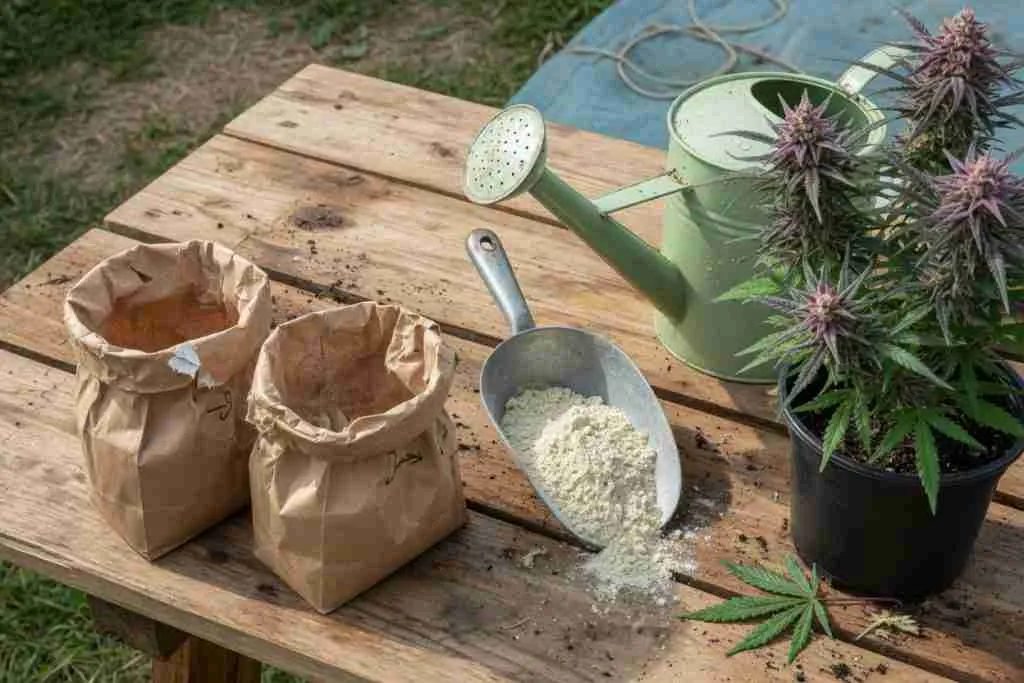
Rank the job before you rank the bag. Outdoor bloom food has to survive rain you did not schedule, a sun that writes the flip, and a pot that is either a bathtub or a thimble. A 2-8-4 in a living bed is slow food. The same numbers in a salt jug, poured into a 7-gallon fabric pot after a storm, is a burn waiting to happen. However, both bags can say Bloom in the same size type. Read the numbers. Read the week. Then decide.
Forums love a champion bottle because a bottle is easy to photograph. Plants love a dry-back, a night that actually gets dark, and a feed that matches the stretch they are in. If you skip that and chase a trophy, you will spend August fixing tips. The rank of jobs still sits above any jug. Light, water, and air beat bloom food. Food is downstream. Keep it there.
Write the outdoor bloom job on a card and tape it to the shed:
1. The sun starts flower. You do not flip a backyard with a wall timer.
2. Keep some nitrogen through the stretch. Zero-N too early makes skinny colas.
3. Phosphorus has a ceiling. Extra PK does not dry September.
4. Rain is a feed you did not mix. Skip a pour after a soak.
5. A ground bed wants slow meals. A small fabric pot wants a milder liquid, less often than a tent chart.
6. Stop when the plant is finishing, not when the bag is empty.
The sun writes the bloom, not a bottle
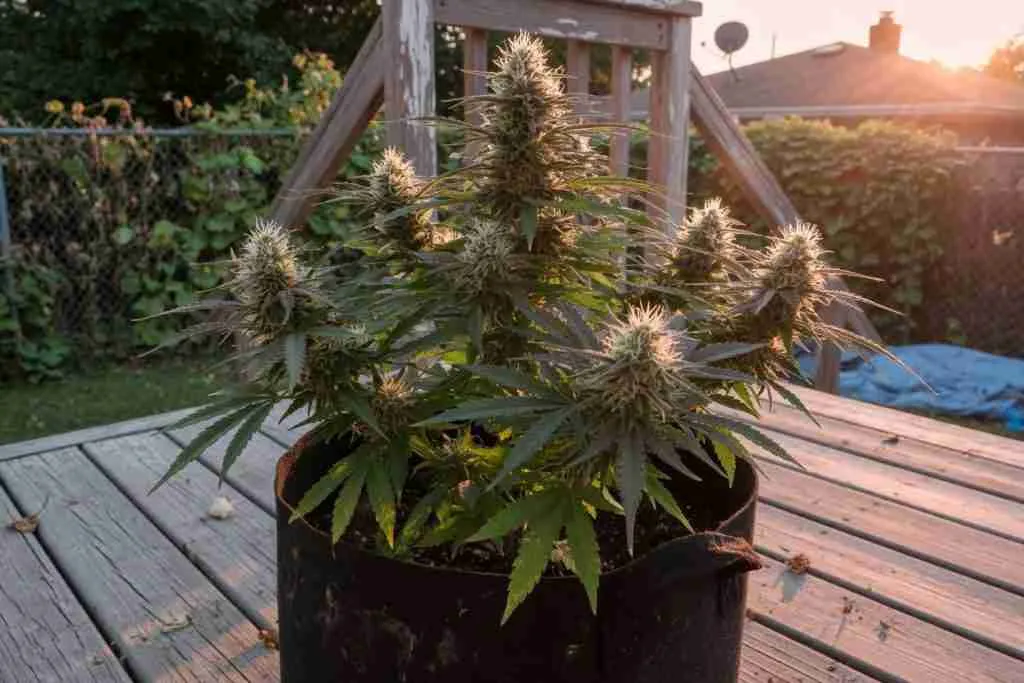
A photoperiod in the yard starts stacking pistils when nights get long enough, usually a couple of weeks after the solstice if you watch for pre-flowers, not when you cracked a jug. Indoor flower pages talk about a 12/12 flip because a tent has a switch. The flowering-stage guide is that indoor clock. This page is the sun’s clock. Do not drag a tent calendar onto a deck and call it a plan.
Look at the plant, not the bag date. Pre-flowers at the nodes, then a stretch, then real stacking. That is when you ease nitrogen down and let phosphorus and potassium do more of the work. Pouring bloom food in May because the label said flower mix is how you stall a vegging weed plant that still needed leaf. The sun has not written bloom yet. You just wrote a salt headache.
Named packs on this bench are feminized photoperiods unless a card says otherwise. Cherry Bomb lists 7 to 8 weeks of flower. Chocolate Wedding Cake lists 7 to 9. Strawberry Candy lists 8 to 10. OrangeTheory lists 9 to 10. Tropico FireStorm lists 8 to 9. CBD Cheese Cake lists 7 to 8. Those windows start when the plant actually flowers, not the day you popped the seed. Canadian Sunshine is the East Coast outdoor house line, seventh-generation Sensi Star, listed at 7 to 8 weeks of flower and selected for a wet fall. If your September is a sponge, that kind of window matters more than a louder PK number. The outdoor cannabis seeds page is the pack side of that choice. The 60 to 70 day strains page is the short-window shop. Do not invent an auto SKU to outrun a wet month. If a card does not say auto, it is not one.
Four plants still write the year
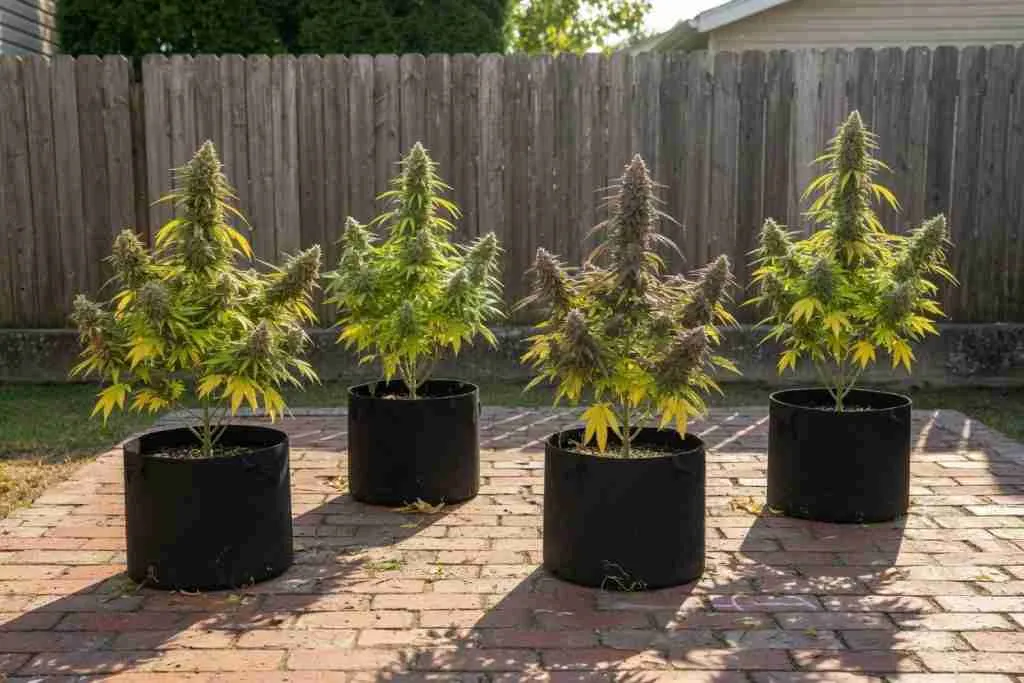
In Canada, recreational home grow is four plants per household, not four per adult. That number is the year. Quebec still prohibits recreational cultivation. Manitoba has allowed up to four plants indoors only since 1 May 2025, so a Manitoba backyard bloom program is not a legal rec plan. US plant counts are a state job. Read your own rules before you pop anything. The shop sells seeds. It does not issue a registration. The Canada ordering hub is the packing and plant-count math in one place.
Four holes in the sun is a year you can finish. Eight cups on one deck is a humidity trap with pretty tops in July and rot in September. Feed is not a way around that. Extra bloom mix on crowded plants just makes denser wet flowers. Honestly, that is the opposite of help. Finish four well. That is the whole outdoor year.
Read the NPK before you trust the word Bloom
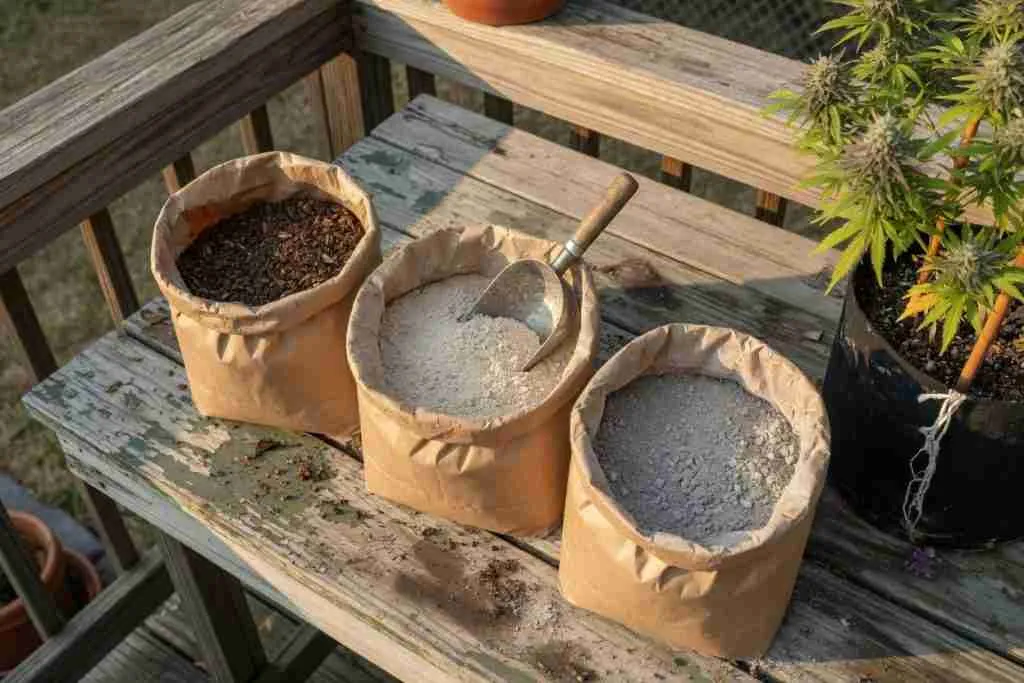
N is nitrogen, the leaf builder. P is phosphorus, the root and flower mineral people love to overbuy. K is potassium, the water-and-sugar mover that actually shows up in a lot of late-season work. A bag that says Bloom and prints 2-8-4 is a low-N, higher-P, moderate-K organic style. A 3-9-4 is the same idea with a little more of each. A 0-10-10 is a finishing ratio, not a first-pistil ratio. A 1-3-2 style like 5-15-10 keeps some nitrogen, which outdoor stretch still wants. None of those numbers is a trophy. They are a sentence. Read the sentence.
A grower who only shops the word Bloom will grab 0-10-10 in week one of hairs and then wonder why the plant looks pale and skinny. Nitrogen did not become the enemy the minute a pistil showed. Stretch is still building the scaffold. You ease N down. You do not drop it off a cliff. The vegetative stage is where you built that scaffold. Bloom food should not erase it.
Ignore brand wars. A 2-8-4 from a garden center and a 2-8-4 from a hydro shop are the same three numbers if the percentages are honest. Organics release slow because microbes have to chew the meal. Salts are ions in the water today. That difference matters more outdoors than the logo. Rain and soil volume decide whether a fast ion is a gift or a burn. The synthetic fertilizer page is the salt-mixing job. This page is when that job is the wrong outdoor tool.
Keep some nitrogen through outdoor stretch
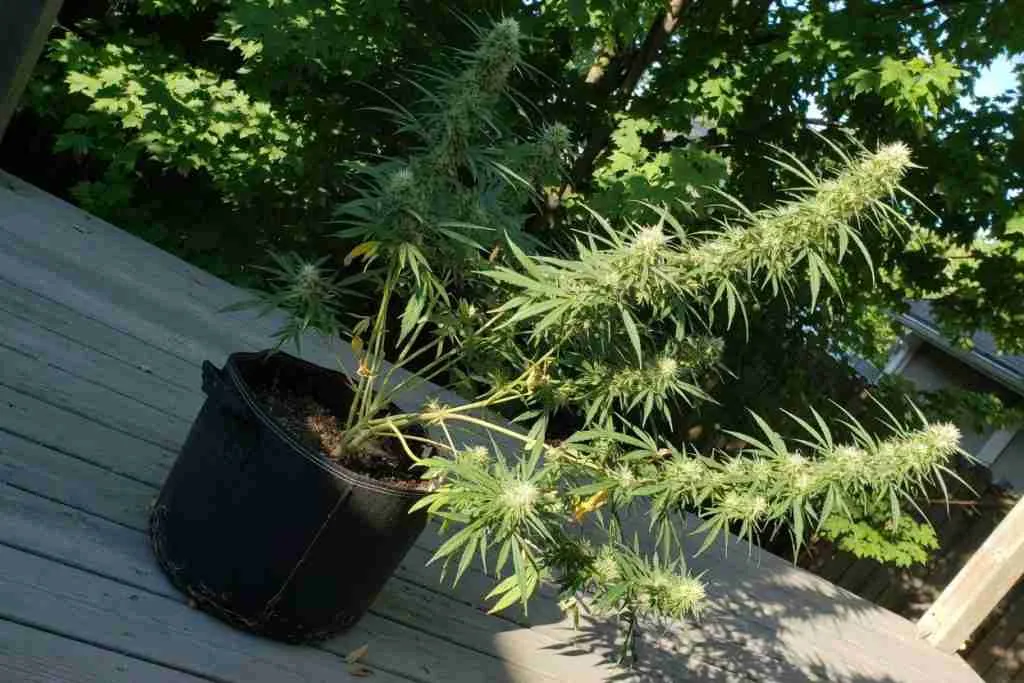
Stretch is the plant reaching for the last of the summer light while it starts stacking. Outdoors that can last two or three weeks after you first see real pistils. During that window you want lower N than veg, not zero. A pale, stretching marijuana plant with crispy lower leaves is often a grower who switched to a 0-something-something too fast, then blamed genetics. Keep a little leaf food in the mix until the internodes slow down and the tops start to fatten.
A simple outdoor picture: veg on something near even, like a 4-4-4 living mix or a mild veg liquid. When pre-flowers are obvious, slide toward 2-8-4 or 3-9-4. Mid flower, stay there. Late flower, you can drop N further if the plant is still dark green and greedy. If the plant is already fading on a living bed, leave it alone. Chasing a chart after the plant has told you it is done is how you salt a finish.
Watch the fan leaves, not a forum week number. Healthy stretch leaves stay green enough to work. A little yellow on the oldest fans in late flower is a fade. A crash on new growth in week two of hairs is hunger or lockout. Those are different jobs. Hunger you feed. Lockout you fix water and pH. The water hardness guide is the tap story. Do not dump more P on a lockout and call it bloom.
Phosphorus has a ceiling
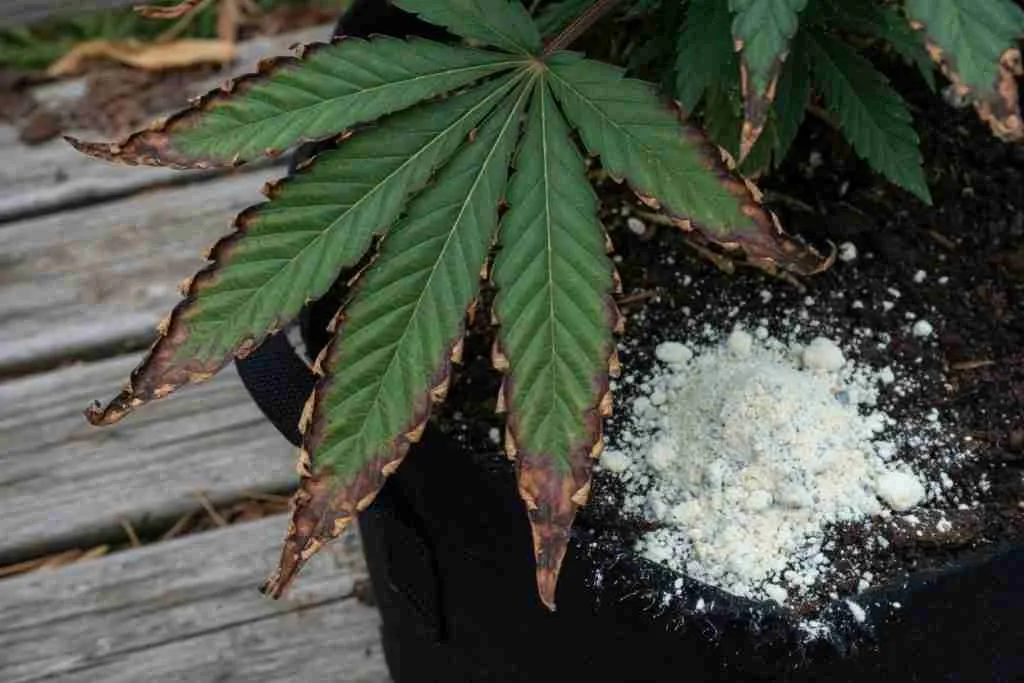
Here is the part ranking pages skip. Cannabis does not keep packing on flower just because you doubled P. Past a modest band, extra phosphorus is salt, runoff, and burnt tips. A lot of outdoor soils already hold more P than a tent coco ever did. Adding a booster on top of a 2-8-4, plus bone meal, plus a banana-peel tea, is three votes for the same mineral. The plant only needed one.
If a leaf is dark, shiny, and the tips are clawing or crisping, you are past the ceiling. Stop. Water plain. Let the pot dry. Do not “correct” a burn with more bloom. The booster page already covers why extra PK will not fix light, air, or a late cut. You are outdoors now, so add this: a wet September is not a phosphorus deficiency. It is weather. More PK makes denser, wetter flowers. That is a rot recipe, not a yield trick.
Potassium still matters for water movement and for finishing. You can have enough P and still want K in the late mix. That is why 2-8-4 and 3-9-4 exist as a pair of numbers, not a P-only powder. A 0-50-30 hydro booster belongs in a measured indoor reservoir, not in a rain barrel on a deck. If you want the indoor booster argument, it lives on that sibling URL. This yard does not need a fourth bottle.
Rain is a feed you did not mix
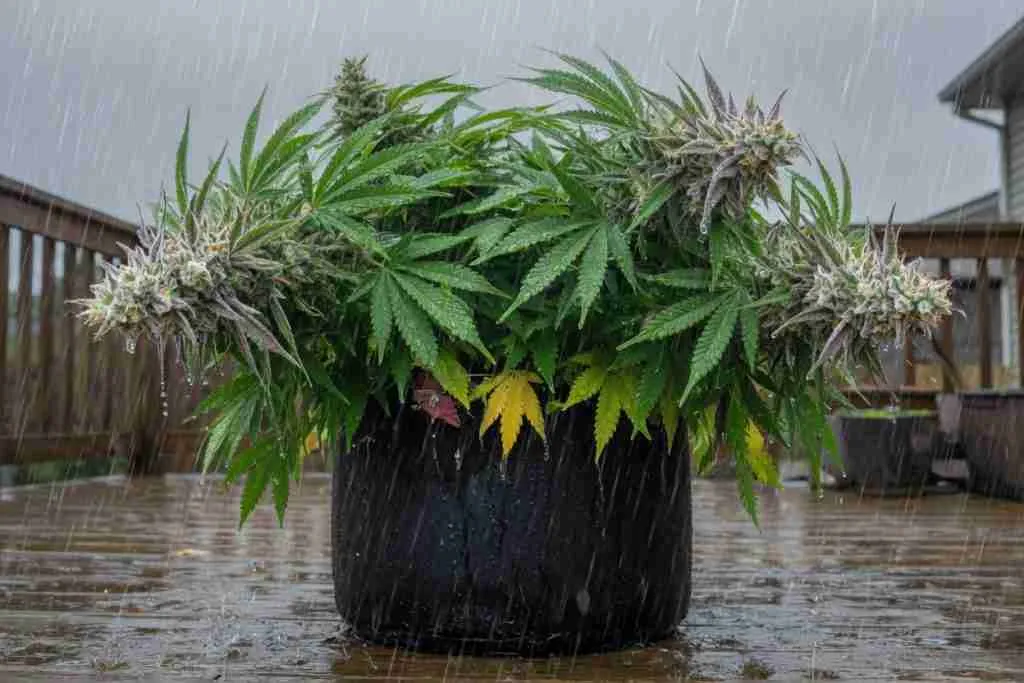
A 25 millimetre rain on a 15-gallon fabric pot is a watering you did not do, and it is a leach you did not plan. Salts leave. Some of the liquid feed you poured on Tuesday is in the tray, or in the lawn, by Thursday. Meals in a living mix move slower, so a rain week is less of a robbery and more of a pause. Either way, pouring bloom the morning after a soak is how my buddy cooked his tips. The pot was full. The roots were drowning. The jug did not know that.
Lift the pot. If it is heavy, skip the can. If the bed squelches, skip the can. The watering guide is the lift-and-weight habit. Outdoors you add a sky that does the same job without asking. Keep a cheap rain gauge, or a tuna can on the rail, and write millimetres in the notebook. After about 20 millimetres on a small pot, you already watered. After a three-day soaker, you also flushed. Do not “make up” a missed feed on a swamp.
Rain is also soft water. That can be a gift if your tap is hard. It can also drop the EC in a salt program so the plant looks hungry two days later. Hunger after a storm is not a cue to double the next jug. Mix a milder jug, or wait until the pot actually dries. Hardness and rain are different taps. Do not treat them as one recipe.
Ground beds versus fabric pots on a deck

A ground bed is a pantry. Roots roam. Microbes chew meals for weeks. A top-dress of 2-8-4 in July can still be working in August. Rain dilutes, but the volume of soil is huge, so you do not lose the whole program in one storm. A 15-gallon fabric pot on a deck is a lunchbox. It dries fast in sun. It leaches fast in rain. It needs smaller, more timed meals, or a mild liquid, because there is nowhere for extra salt to hide.
Pick the tool that matches the hole. Bed: build the mix once, top-dress at stretch, water when the top is dry, and stop fussing. Fabric pot: use a bigger pot than you think, 20 to 30 gallons if you can lift it, and treat liquid bloom like a measured sip. A 5-gallon bucket in full sun in July is a daily crisis, not a bloom program. The pot-size and media guide is the long version of that choice. The outdoor site guide is sun, wind, and nosy neighbors. This page only cares how those two holes eat.
Walking the yard after a storm, a bed plant can still look thirsty on top while the subsoil is wet. A fabric pot never lies that way. If the fabric is dark and heavy, it is wet. If it is light and dusty, it is dry. Feed only travels in water. Dry mix plus a scoop of meal just sits there until the next rain, then dumps all at once. Scratch meals in, then water enough to start them, or wait for a gentle rain, not a flood.
Slow food for soil. Fast food for a pot that dries.
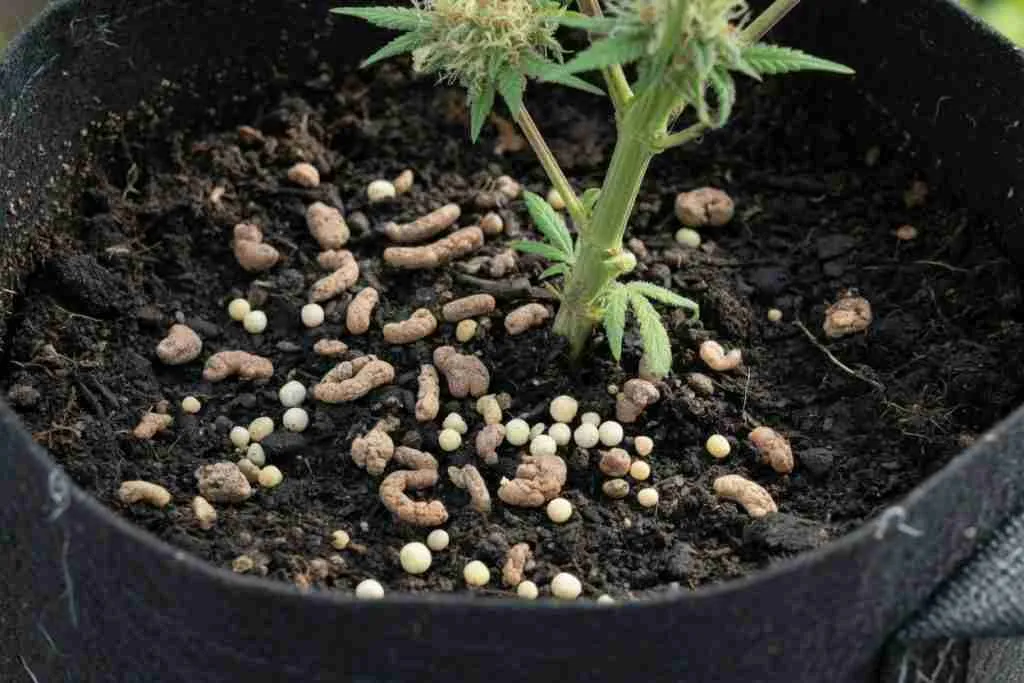
Slow food is meals, compost, castings, and rock powders that microbes have to break. Fast food is a liquid or a fully soluble salt that is available the day you pour. Outdoor bloom likes slow food in a bed because the season is long and the rain is messy. A small pot that dries every other day can starve on meals alone if the biology never catches up, so a mild liquid bloom is the backup, not the identity of the grow.
Do not run both at full strength. A loaded living mix plus a full-rate salt bloom is how you lock a pot. Pick a captain. If the bed was built with compost, castings, and a bloom top-dress, the liquid is a sip on a hot week, or nothing. If the fabric pot is bagged soil with little life, a labeled bloom liquid at half the indoor rate is the program, and you still skip it after rain. The seaweed fertilizer page owns kelp rates. Do not stack kelp, molasses, and PK on the same Tuesday and call it organic bloom.
Bone meal, guano, and a 2-8-4 top dress
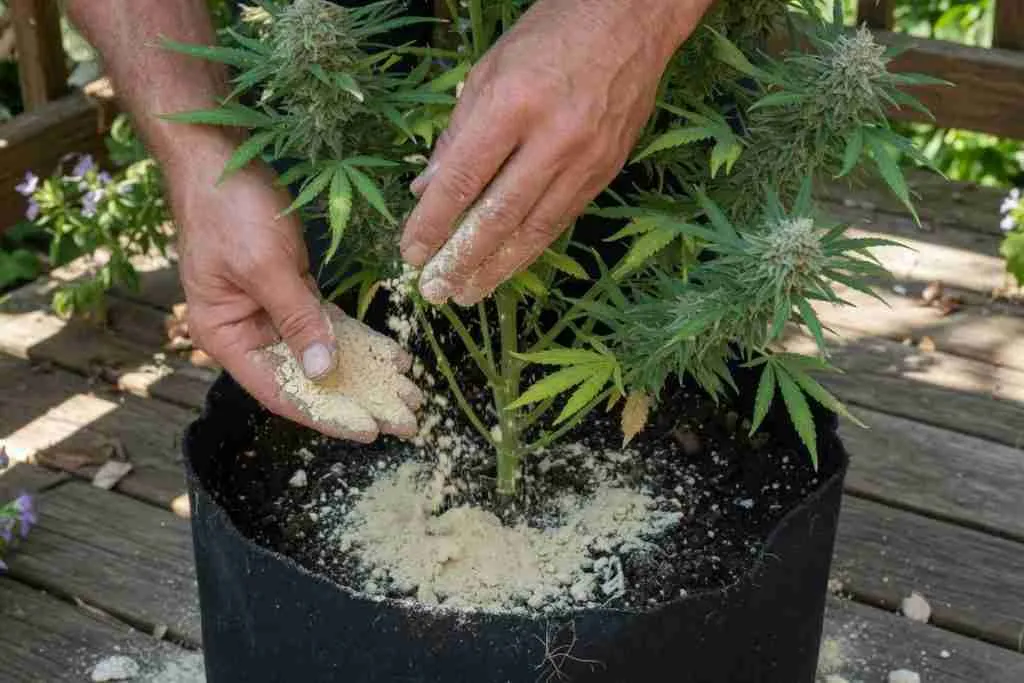
Bone meal is slow phosphorus and a little nitrogen. Bat guano in the bloom style is faster P with more smell. A blended 2-8-4 or 3-9-4 dry is the easy outdoor top-dress because someone already balanced the three numbers. You do not need all three products. Pick one dry bloom and learn it. Scratch a thin ring around the drip line, not against the stem. Water it in. Then wait. Meals are not a daily sprinkle. A 20-gallon pot might take 2 to 4 tablespoons of a 2-8-4 at the stretch, then a lighter pass three weeks later if the plant is still hungry and the leaves are not dark and clawed.
Those tablespoons are a starting picture, not a law. A rich bed that got compost in spring may want half of that. A hungry, pale plant in tired soil may want the full pass plus a week of watching. If the leaf edges burn, you already passed the useful dose. More bone meal will not un-burn them. Guano is easy to overdo because it is faster. If you can smell it from the porch, you used too much.
Pros of a dry 2-8-4 top-dress: it matches a long outdoor stretch, it does not dump all its salt in one rain if the biology is alive, and you are not mixing a jug every other day. Cons: it is slow, so a starving pot will not bounce in 24 hours, and a cold wet spring will sit on the meal like a brick. Bone meal in cold, wet, acidic soil is famous for doing nothing until July, then doing too much. If your yard is a clay bathtub, fix drainage before you buy another bag of P.
Liquid bloom when the pot is the whole farm
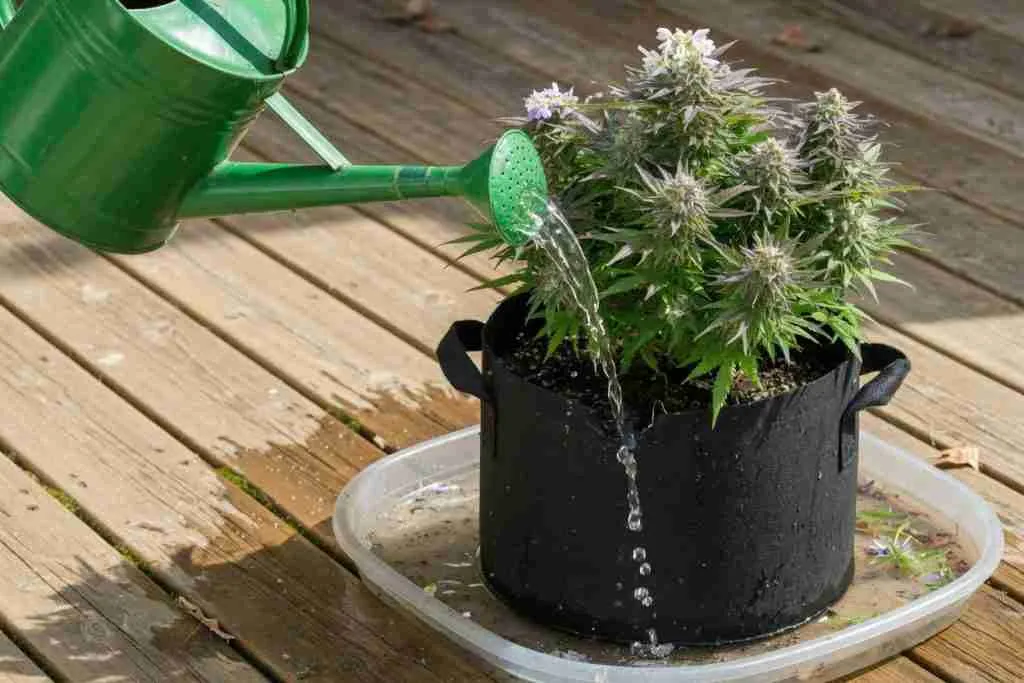
A fabric pot on a deck is the whole farm. Roots cannot wander into the lawn. What you pour is what they get, and what rain washes out is gone. That is when a liquid bloom earns its keep. Mix at half the indoor bottle rate to start. Outdoor sun already works the plant hard. Full tent strength in July sun is how you get taco leaves by supper. Pour until you see a little runoff, then dump the tray. Do not let a pot sit in a brown lake. That lake is yesterday’s salt, reheated.
How often? When the pot is light, and not on a rain day. In a hot dry week that might be every two or three days with plain water, and every other watering with a mild bloom mix. In a cool wet week it might be once, or not at all. A calendar that says “feed Mondays and Thursdays” is a tent habit. Steal the indoor versus outdoor distinction and keep it. The yard is not a tent with the roof missing.
Pros of liquid bloom outdoors: you can answer a hungry pot this afternoon, you can back off after a storm, and you can stop on a dime when the plant starts to fade. Cons: rain steals it, sun cooks a strong mix, and it is easy to chase yellow with another jug until the tips burn. If you already top-dressed a living mix, skip the liquid unless the plant is actually pale on new growth. Two programs at once is not twice the flower. It is twice the chance you cannot read the leaf.
Wet September is not a PK problem
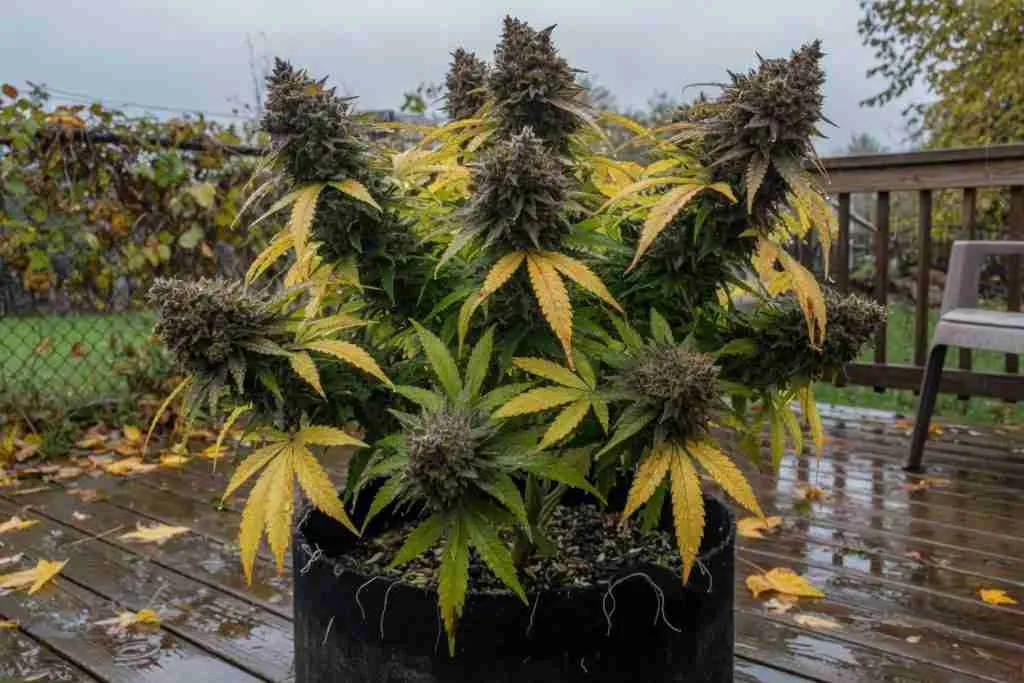
East Coast Septembers get heavy. Buds swell, nights cool, and air sits still. That is rot weather. Extra bloom food makes flowers denser and wetter. It does not open the canopy. It does not pull water out of a cola. If you are still pouring PK in the third week of a rainy September, you are feeding the mold. Stop the jug. Strip a few inner fans so air can move. Shake plants after a storm. Cut early if a cola goes grey. Food will not rewind that.
This is why the pack’s flower window matters more than a booster. A 7 to 8 week flower that started in late July can be in jars before the worst of the wet. A 10 week flower that started in mid August is still swollen in October. Canadian Sunshine was selected with that wet-fall problem in mind. Cherry Bomb’s 7 to 8 week card is the same kind of honesty. The photoperiod versus autoflower page is which clock you bought. Outdoors, the sun is the switch for a photoperiod. You still have to pick a window that fits your fall. The photoperiod flowering control post is the indoor switch. Do not drag that switch into the yard and expect the sun to obey.
Powdery mildew and bud rot are air and wet-tissue jobs. They are not a cue to buy cal-mag or bloom. If the site is a damp corner with no morning sun, move the pots next year. This year’s PK will not relocate the fence. The site guide already owns that. You are here to stop treating weather like a nutrient chart.
Stop feeding when the plant is finishing, not when the bag is empty
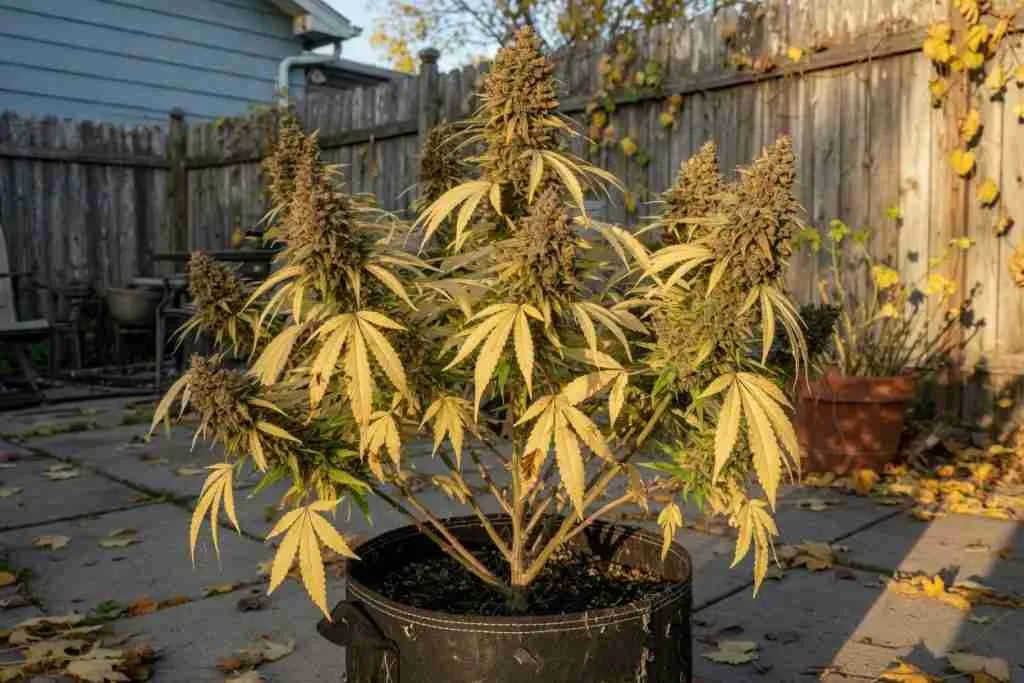
Finishing looks like this: pistils brown in waves, calyxes swell, fan leaves fade from the bottom, and the plant stops asking for a heavy mix. That is the cue to water plain. On a salt program, a week or two of water lets the pot settle before you cut. On a living bed, you were already mostly watering. Do not strip every green leaf on purpose so the photo looks “ripe.” The plant still needs a few working fans to finish the last swell.
The flushing guide is the plain-water job, and it will tell you a pre-harvest flush does not raise THC. Outdoors, rain already did a lot of that work in a fabric pot. A living bed does not need a flood the week before chop. If you salt-burned the tips in August, a corrective water-through is a different job than a fashion flush. Do not mix those two. Harsh weed after harvest is usually the dry. Hang slow, then jar. The dry and cure guide is that week. Bloom food cannot rescue a hot, fast dry.
Cut on the resin, not on the bag. Cloudy heads on the calyx, in white light, are the window. A few amber heads can still be the window. Mostly amber, dull, or brushing off is late. Extra days of PK will not rewind that. If a wet week is eating colas, cut the worst ones and let the rest ride. Food is done. The knife is the tool now.
Specs, pros, and cons for an outdoor bloom run

Here is a spec sheet you can actually use. It is a picture, not a promise of first place, and it is not a brand ranking.
Soil pH outdoors: about 6.3 to 6.8 in a soil or living mix so those three numbers stay available. Coco is a different dial and a different page. If runoff sits under 6.0 in soil, P and some micros get weird. If it sits over 7.2, iron and others hide. A cheap meter in the runoff cup beats guessing from a yellow leaf.
NPK picture: veg near even. Early outdoor flower with some N still on board, 2-8-4 or 3-9-4 as the dry idea, or a 1-3-2 liquid style. Late flower can drop N. 0-10-10 is a finish tool, not a first-hair tool. Do not stack a booster on top of those numbers unless a test or a true P/K hunger says so.
Pot picture: fabric 20 to 30 gallons for a full outdoor photoperiod if you can move it. Smaller than 10 gallons in full sun is a daily watering job and a rain-leach job. Beds at least as deep as a shovel, with drainage, beat a pretty raised box that sits in a puddle.
Timing picture: start bloom-leaning food when pre-flowers are real, often two to three weeks after the solstice on a photoperiod in the north, later if the plant is still a seedling. Stop food when fade starts, or 10 to 14 days before an expected cut on salts. Named flower windows on this bench run about 7 to 10 weeks after flower actually starts. Plan the pack to beat your wet month.
What a bloom bag should list
Three numbers, N-P-K, in that order. The word Bloom without numbers is marketing. A derived-from list if it is organic, so you know whether you bought meal, guano, or a blended 2-8-4. A rate for soil or for liquid, in units you can measure, not “feed as needed.” If the bag will not say those things, leave it. You can do the job with a labeled garden bloom and a notebook. You cannot do it with a slogan.
What a rain week changes
Skip the pour. Lift the pot. Dump trays. Do not top-dress a swamp. After the mix actually dries, you can resume a milder jug if the plant is pale, or do nothing if it is still dark. A rain week is not “lost feeding days” you must make up. It is the sky doing the water job, and often the leach job, for you. Write it down so you do not “catch up” on Saturday and burn Sunday.
Pros of treating bloom as this outdoor job: you stop buying stacked bottles, you match food to sun and rain, and you keep four plants readable. Cons: there is no single champion jug to brag about, meals are slow, liquids get stolen by storms, and a wet fall will still beat a perfect NPK if you picked a 10-week flower for a 7-week autumn. The honest trade is boring on purpose. Boring jars more weed than a trophy shelf.
If you are still shopping seeds for this year, pick the clock first. Photoperiods on this bench list flower in weeks after they start, and named packs are sold against a 70 percent paper-towel test. Mix packs are excepted. Photos of the test are part of that product, not a slogan on this URL. Then buy food that fits the hole. Then shut the shed and let the sun work.
Questions growers ask
When do you switch to bloom food outdoors?
When you see real pre-flowers and the stretch is on, not when a calendar hits a tent week. For many northern photoperiods that is a couple of weeks after the longest day, once nights are doing the work. A plant that is still a seedling in July is not in bloom because you bought a bloom bag. Wait for hairs. Then ease N down. The photoperiod explained page is why that night length matters. This page is what you pour after the plant agrees.
Can you use indoor bloom bottles outside?
You can, at a milder rate, in a pot you can lift and leach. Half the tent rate is a sane start. Skip it after rain. Do not use a 0-50-30 hydro booster as a backyard hose-end feed. Indoor bottles assume you control the water. The yard does not. If the mix is already a living bed with a 2-8-4 on it, leave the indoor jug in the basement. Two captains sink the boat.
Do you flush outdoor marijuana before harvest?
If you ran salts in a fabric pot, a week of plain water while the plant fades is housekeeping. If rain already soaked that pot, you may already be there. A living bed does not need a flood. Flushing does not raise potency, and it does not fix a fast dry. Cut on the resin, hang slow, then jar. That is the finish. The jug is already out of the story.
How often do you feed a fabric pot in flower?
When it is light, and not on a rain day. Alternate mild bloom and plain water in a hot dry week. Pause in a wet week. There is no Monday-Thursday law. A 20-gallon pot forgives you. A 5-gallon pot in July sun does not. If you cannot lift the pot to check, you picked a hole you cannot manage. Downsize the plant count before you upsize the jug.
The 10-steps guide is still the order of jobs if you want the whole year in a list. This URL is only the outdoor bloom decoder: sun, rain, hole, numbers, then stop. Buy a pack that fits your fall. Feed the job you actually have. Let the rest of the bottles stay on the shelf.