B Vitamins Cannabis Plants

B Vitamins Cannabis Plants
B vitamins cannabis plants use are cofactors the plant builds for itself. Thiamine and the rest of the B group help enzymes turn sugars into energy and move ordinary metabolism along. A healthy plant with leaves, roots, light, and a normal feed already does that work. Pouring a B1 solution on the soil does not speed the plant up, and it will not raise the THC in your marijuana.
The bottle on the hydro shop shelf says otherwise. The label talks about transplant shock, new roots, stress, and bigger flowers. Those claims are old, and they keep selling because a vitamin sounds gentle. People take B vitamins when they feel run down, so it is an easy leap to feed the same idea to a droopy plant. The leap is the mistake. A cannabis plant is not short of a pill because you are.
This page is about the plant. It is not a guide to supplements for you. In Canada the federal baseline is four cannabis plants per household, not four per adult. Quebec still prohibits recreational home growing. Manitoba, since 1 May 2025, allows adults 19 and older up to four plants, and only indoors.
What a healthy plant already makes
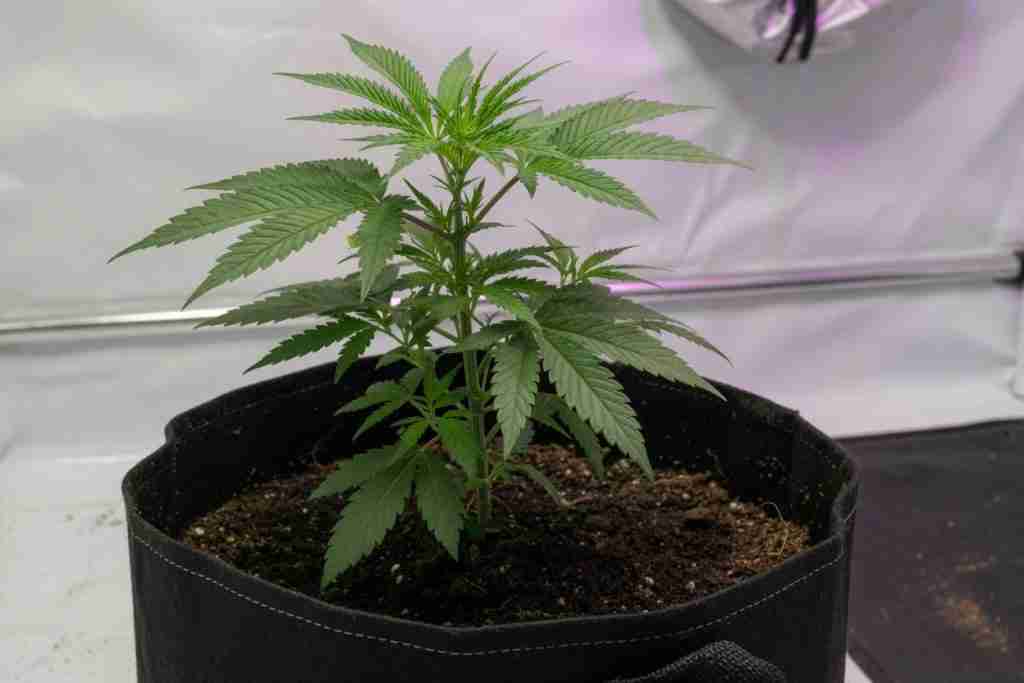
Thiamine, vitamin B1, is a cofactor in the pathways that use carbohydrates. The plant needs that chemistry. It also makes the thiamine. Riboflavin (B2) and niacin (B3) sit in the same family of helpers, tied to moving electrons and to the cell’s energy currency. Pantothenate (B5) feeds into coenzyme A. Pyridoxine (B6) sits with amino acid metabolism. Biotin and folate have their own enzyme jobs. None of that is a shopping list. It is what a leaf and a root already assemble when the plant is intact and growing.
You will not diagnose a “B1 deficiency” the way you diagnose nitrogen. Nitrogen yellows older leaves in a pattern you can name. A missing cofactor inside a normal plant does not paint a clean symptom on a fan leaf, because the plant keeps making the cofactor. If the canopy is even and the new growth is coming, there is no vitamin week to keep on the calendar. Adding a dropper “just in case” is a habit, not a correction.
Hydro does not change the basic fact. A plant in a reservoir still has leaves, and those leaves still synthesize thiamine. You have fewer microbes in a sterile tank than in a living bed, so you lose the little extra the microbes would have made in soil. You do not lose the plant’s own supply. That is why a coco or hydro plant on a complete nutrient does not grow a B-vitamin requirement the day you move it out of a soil cup. If that plant stalls, look at the solution strength, the pH, the water temperature, and the oxygen at the roots. Those are the hydro failures. A vitamin additive is not the missing half of the recipe.
Roots matter to this story for a mechanical reason. An intact plant has leaves that photosynthesize and roots that take up water and minerals. Fungi and bacteria around those roots make thiamine too, so a living soil is not an empty cupboard waiting for a bottle. The narrow lab case is different. In tissue culture, a tiny piece of plant sits in a sterile gel with no roots and no real leaves. That media often includes thiamine because the cutting of tissue cannot supply itself. A plant in a pot in your tent is not that dish. Home growers are not running sterile culture, and a reservoir is not a petri plate.

The transplant shock claim
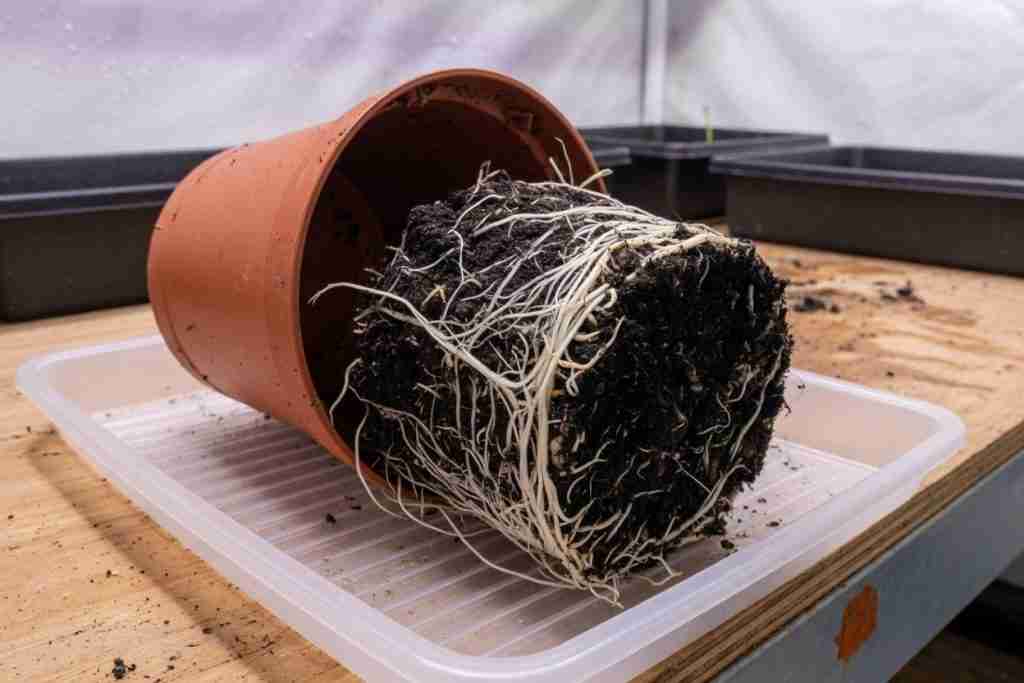
The claim that vitamin B1 reduces transplant shock and grows new roots is the one that will not die. It started with early work on plant tissue, then with products that mixed thiamine and an auxin in the same bottle. The roots responded. Later work separated the ingredients. The auxin was doing the rooting. Thiamine on its own, poured on whole plants, did not stimulate root growth. In at least one comparison, plain water beat the thiamine treatment. Extension horticulture has repeated that finding for years. A cannabis transplant is a whole plant. The B1 in the watering can is not the ingredient that settles it.
Shock, when it is real, is mechanical. Fine roots tore when the ball slid out. The new pot was dry at the edge and wet only under the stem. The light jumped from a gentle shelf to a full tent. A strong feed went in the same hour as the move. Leaves droop because water is leaving them faster than the disturbed roots replace it. That is a water and environment problem for a day or two, not a missing vitamin. If you soaked the root ball, set it in a moist pot, and kept the light from blasting the leaves, most plants stand back up without a tonic.
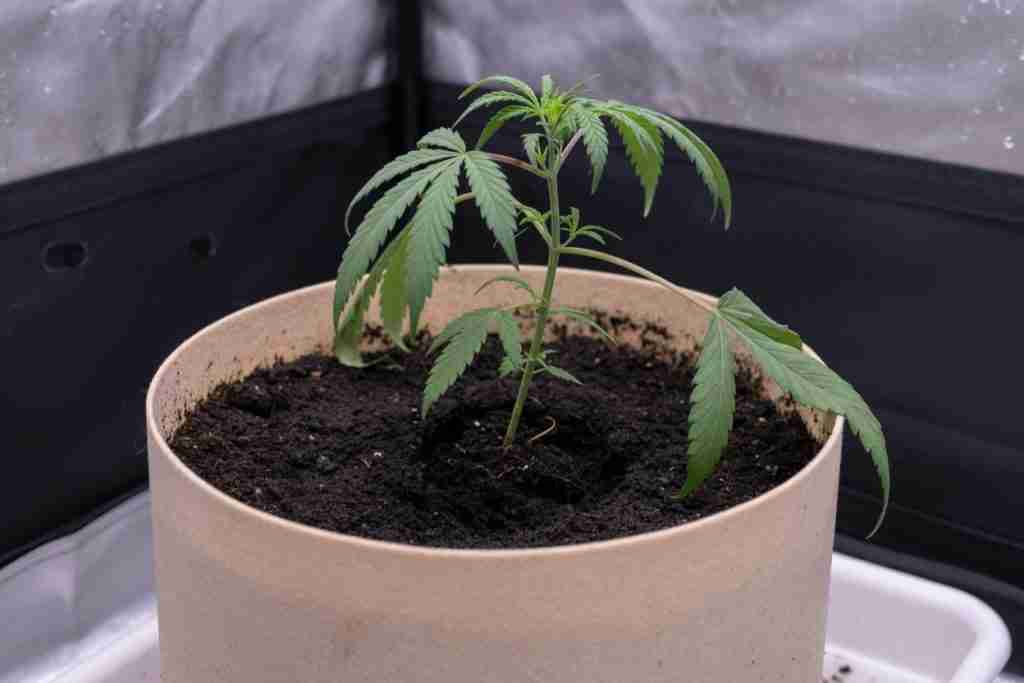
The move itself lives on the transplanting guide. Water the new medium, support the stem, and do not yank a rootbound plug into a dust-dry hole. The watering guide owns how much to pour after that. This page only needs the boundary: do the move in vegetative growth, not in flower, and do not stack a hot bottle of feed on the same afternoon. A plant that is still flat several days later needs you to check the root zone for a swamp or a dry pocket. Another dose of B1 will not dry a saucer or rewet a channel.
Watch the plant on a short clock instead of a product clock. The afternoon you move it, a little flag in the leaves can be normal if the root ball was disturbed or the tent is warmer than the shelf it left. By the next morning the leaves should have some lift if the pot was watered through and the light is not parked on the canopy. If it is worse on day two, lift the pot. Heavy and sour means you drowned the new roots. Light as a dry sponge means the water ran down the wall and the core is still dry. Fix that before you open a bottle. A topped or bent plant is the same kind of pause. The cut or the bend is the stress. Steady water and the light you already had will carry it. Thiamine does not seal a wound or unbend a stem.
A bottle that “always works” on transplant day is usually hiding something else. Read past the vitamin line. Kelp, a humic fraction, or a little nitrogen and potassium will change how a plant looks because those are feeds and biostimulants, not because thiamine grew a new root system overnight. If kelp is the ingredient you actually wanted, use the seaweed fertilizer page and follow that product, lightly. Do not add a second vitamin story on top of it and call both of them necessary.
Boron is not a vitamin
Search boxes mix these up because both get shortened to the letter B. Boron is a mineral element. Vitamin B is a family of organic cofactors. The plant needs a little boron for new cell walls, and the gap between too little and too much is small. Tip burn and twisted new growth can be a boron problem, a pH problem, or something else entirely. That diagnosis belongs on the nutrient deficiency page, next to the rest of the minerals, not in a vitamin aisle.
A human B-complex tablet does not solve either question. Dissolving a pharmacy pill in the reservoir adds whatever fillers and doses that pill was built for a person, not a measured mineral feed for a plant. It will not correct boron, and it will not play the role thiamine already plays inside the leaf. Leave the medicine cabinet out of the tent. If the new growth is twisting, check pH and the feed you are already using before you invent a supplement.
B12 is the other mix-up inside a “full complex.” Cobalamin is the vitamin people mean when a blood test says B12. Plants do not run on that supplement. A cannabis leaf is not waiting for a methylcobalamin capsule ground into the reservoir. The B vitamins that show up in plant biochemistry are the ones the plant makes: thiamine, riboflavin, niacin, pantothenate, pyridoxine, biotin, folate. Buying a human complex because the word vitamin is on it mixes two kingdoms. If you are tired, that is a question for a clinician. It is not a feeding chart for the tent.
Seeds, clones, and the bottle
A seed does not need a B1 soak to pop. Germination runs on moisture, warmth, and oxygen. A vitamin in the soak water does not revive a dead seed, and it is not one of the levers that moves a viable seed to open on time. The germination guide is direct about this: skip B1, along with rooting gel and a bloom feed, when you are trying to get a seed to open. Start the seed. Move a photoperiod plant once, in veg. Put an auto in its final pot early. The seedling stage is about a gentle environment after the seed is up, not a vitamin calendar.
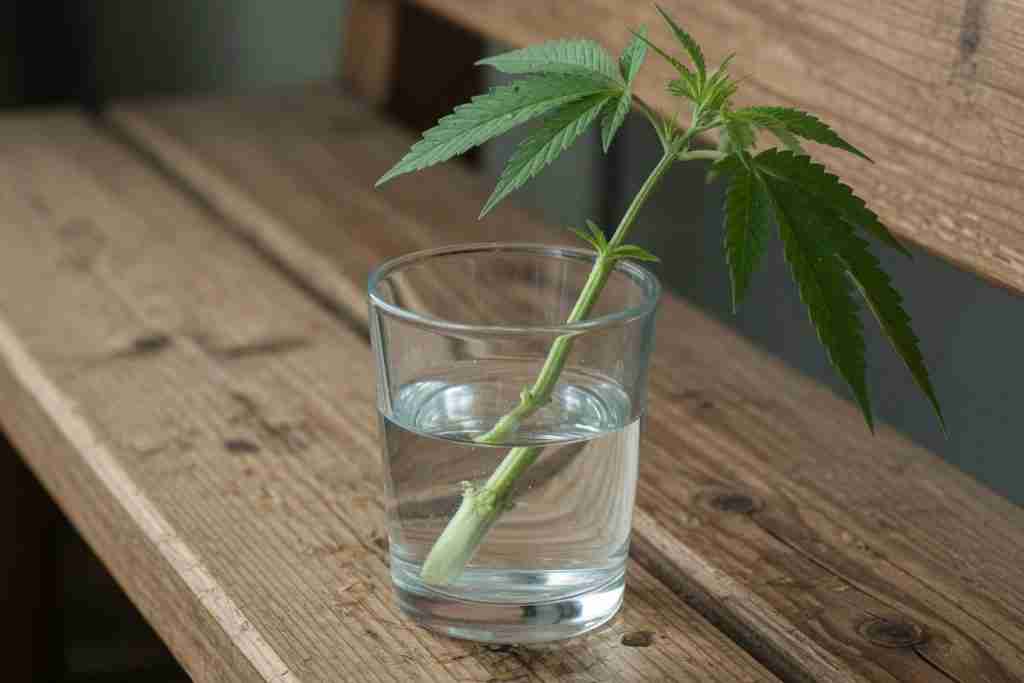
A clone is the closest home growers get to the lab story, and it is still not a thiamine project. The cutting has no roots yet. What pushes roots on a stem is an auxin product, a clean cut, and a humid cube that is not a puddle. The old B1 reputation came from bottles that also contained auxin. If you want the rooting step, follow the cloning guide and use a rooting product that says it is a rooting product. A B-vitamin additive in the cloner water is not that step. Some growers put a whisper of kelp in clone water to keep tissue fed. That is a seaweed decision, and the dose lives on the seaweed page, not here.
The mother you cut from is the same story. Taking clones stresses her because you removed growing tips, not because you drained her thiamine. Give her the water and the light she already had, and feed her only if the new growth is pale in the nitrogen pattern. A vitamin drench after chop day does not replace the shoots you cut off. If she stalls, look at whether you stripped her too hard, whether the pot dried out while you were busy with the cuts, and whether the room ran hot. Those are ordinary grow problems with ordinary fixes.
Read a “B vitamin” bottle the way you would read any additive. Turn it around. If the label lists kelp, humic acids, or an N-P-K line, you bought a light feed with a vitamin story on the front. The feed might be mild enough to use. The vitamin is not why a plant roots or why a cola fills in. You do not need a schedule that says every couple of weeks for the life of the plant. A plant in vegetative growth on a complete soil mix or a complete nutrient is already supplied. A second dropper on top is how reservoirs get crowded with products you cannot tell apart when something goes wrong.
If you run salts, stay on the synthetic fertilizer program you already measure. If you run soil, the organic fertilizer page is the meal. Neither style needs a parallel vitamin habit. Adding one “because the forum said stress” makes the next yellow leaf harder to read. You will not know whether the leaf is the feed, the pH, or the extra bottle.
Stress is a wide word, and the bottle uses it on purpose. Heat that curls leaves is a dry root zone and a hot canopy. A plant that flops after you forgot a watering is thirsty. A plant that flops in a heavy pot is drowning. Pests are pests. None of those is a thiamine gap. Fix the tent temperature, the pour, or the leaves you can see being eaten. Then leave the chemistry alone for a few days so you can tell whether the fix worked. Stacking a vitamin, a kelp spray, and a bloom booster on the same evening gives you three new variables and no answer.
A leaf that looks hungry
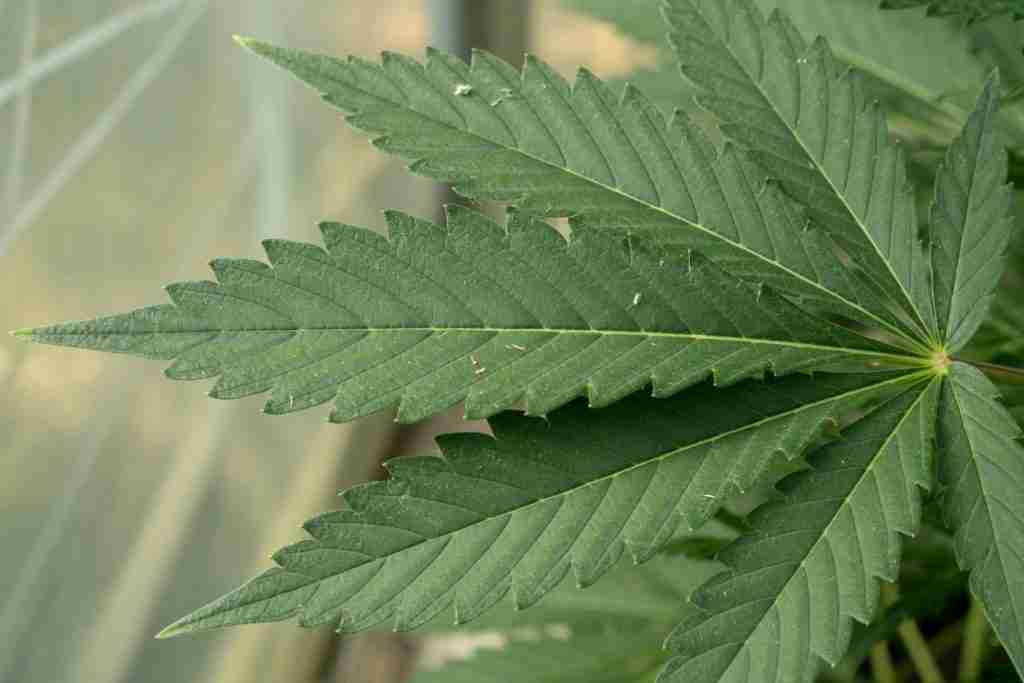
Yellow leaves are the moment people reach for a gentle spray. Match the pattern instead. Older fans paling from the tip inward, while the plant is still stretching, are often nitrogen. The nitrogen guide is that pattern. Yellow between the veins on older leaves, veins still green, is often magnesium, especially in coco or very soft water. That lives on the magnesium page. Burnt edges and clawing are a different mineral story, usually potassium or a salt buildup, and they are not fixed by riboflavin. The deficiency page is the place to compare the leaf with the chart before you add anything.

A foliar spray is for a problem you can name, on leaves that are still leaves. The foliar feeding guide is clear that you stop once flowers stack, because you are spraying a future jar. A B-vitamin mist on a yellow fan does not refill nitrogen, and a B-vitamin mist on a cola is residue you will smoke. If the leaf is hungry, fix the root feed and the pH. If the leaf is drooping in wet soil, stop watering before you spray anything. Weed plants show the same patterns as any other crop. The vitamin bottle is the detour.
Flower is not a vitamin week
Flower is where the marketing gets loud. A label that says bud strengthener is selling the week you are most willing to buy something. Buds bulk when the plant has light, a stable root zone, and the phosphorus and potassium a normal bloom feed already carries. The phosphorus guide and the flowering stage page own that feed. A B-complex does not become a bloom booster in week five. It does not raise cannabinoids. It does not fill airy flowers that were airy because the light was weak or the plant was stressed in veg.


Late flower is a bad time to add a new bottle. The plant is finishing. Extra sugars, extra kelp, and extra vitamins in the reservoir are more dissolved solids in a pot that is already on a bloom recipe. If the leaves fade a little as the plant ripens, that fade is not a cue to start a vitamin spray. If the fade showed up early, in veg or the first weeks of flower, go back to nitrogen, magnesium, and pH. Do not let a shop chart turn flower into a vitamin week you repeat every run.
Heat in flower fools people the same way. Foxtailed buds and canoeing leaves are a light and temperature problem. The plant is not asking for a cofactor spray because the canopy is too close to the lamp. Raise the light or ease the intensity, get the air moving, and check that the pots are actually drying and then getting watered. A vitamin mist on a hot flower does not pull the lamp back. It wets bracts you are about to dry. If the room is the issue, the indoor guide is the fix, not an additive schedule.
What to do instead
On transplant day, water the soil across the pot so the new roots have moisture without a swamp. Ease the light for a day or two if the leaves flag. Wait on a strong feed until the plant is reaching again. The indoor growers guide is the room: light, air, and humidity do more for a moved plant than a tonic. Outdoors, the same idea holds. Shade the plant from a hard afternoon if it wilts, and water the root zone, not the story on a label.
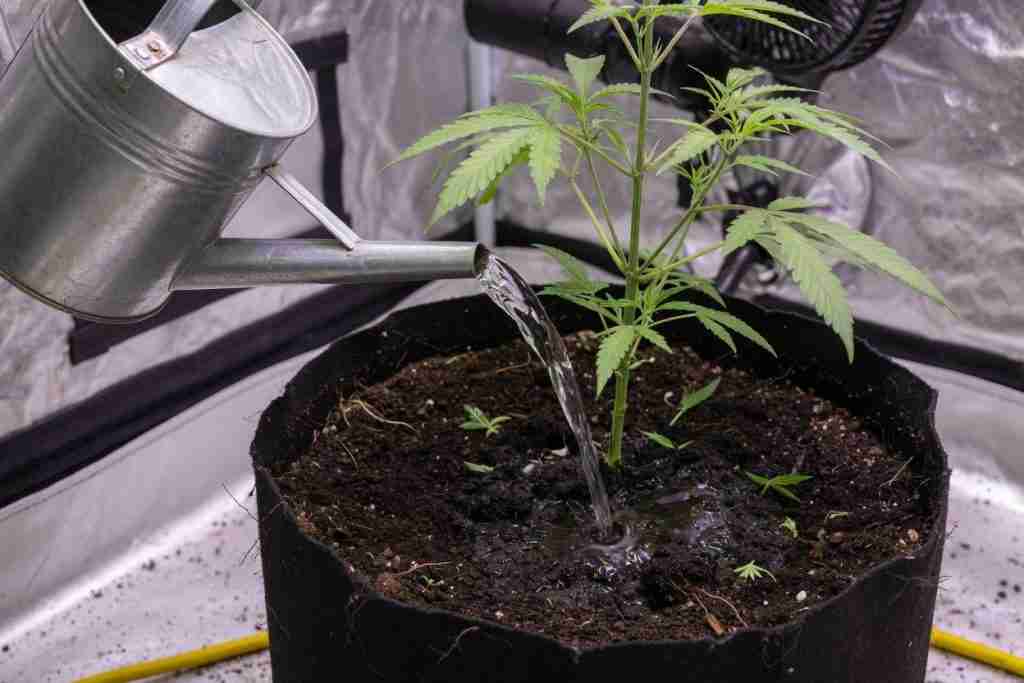
On seed day, use plain moisture and the germination page. On clone day, use a rooting product and the cloning page, and keep the cube damp and the air humid. On a hungry day, name the leaf and use the mineral page that matches it. On a flower day, keep the bloom feed you already trust and leave the vitamin dropper in the cupboard. A plant that was healthy in veg does not develop a B-vitamin requirement because pistils showed.
If a product you already own lists B vitamins halfway down a kelp or humic label, you do not have to throw it out to be consistent. Use it as the kelp or the humic, at a light rate, and stop telling yourself the vitamin is the active part. If the only reason you bought it was transplant shock or fatter flowers, you can stop buying the next bottle. The plant is already making what that line item claims to supply.
Some of those bottles also carry sugars or carbohydrates “for the microbes.” In a soil pot that can be a light snack for the biology you already have, and it is easy to overdo until the surface grows a film. In a reservoir, the same sugar is food for slime in the lines. If the tank smells sweet or the pump clogs after you started an additive, that additive is the suspect, vitamin story included. Plain nutrient and a clean reservoir will tell you more than another week of the same mix. Run the next plant without the vitamin bottle and compare the leaves, the speed of recovery after a move, and the flower you actually dry. If nothing got worse, the bottle was not the reason the last plant finished.
B vitamins cannabis plants need are the ones in their own leaves and roots. Keep the plant watered, lit, and on a feed you can explain. Skip the B1 pour on seeds, on transplants, and on flowers. When a leaf looks wrong, diagnose the mineral. The dropper is the part you can leave on the shelf.