Are Dark Marijuana Seeds Better Than Light Seeds? Debunking Seed Color Myths


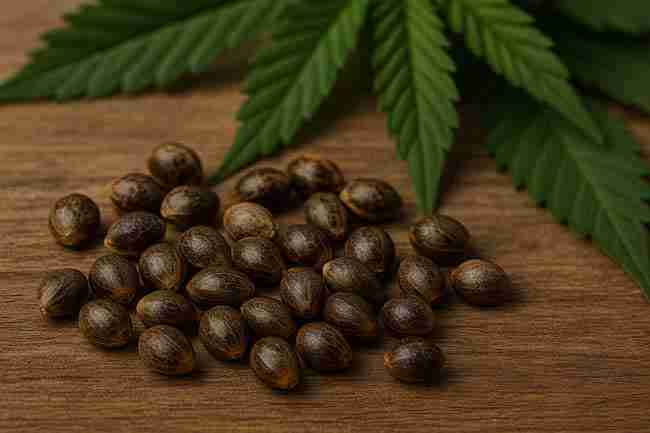
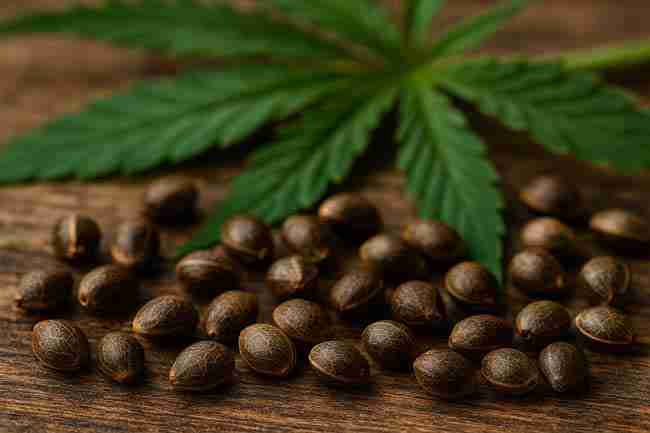
No—“Dark Marijuana Seeds” aren’t automatically better. Seed color tells you a bit about maturity and handling, but not about genetics, potency, yield, or terpene quality. What matters more is seed maturity, storage, age, density, shell integrity, and breeder practices.
The Big Idea
You’ll see dark, speckled, even almost black seeds. You’ll also see tan or lighter ones. Dark Marijuana Seeds often look mature, sure—but light seeds can be equally viable if they’re fully developed. Don’t judge by paint. Judge by feel, density, age, storage, and breeder reputation.
Why Seed Color Confuses Growers
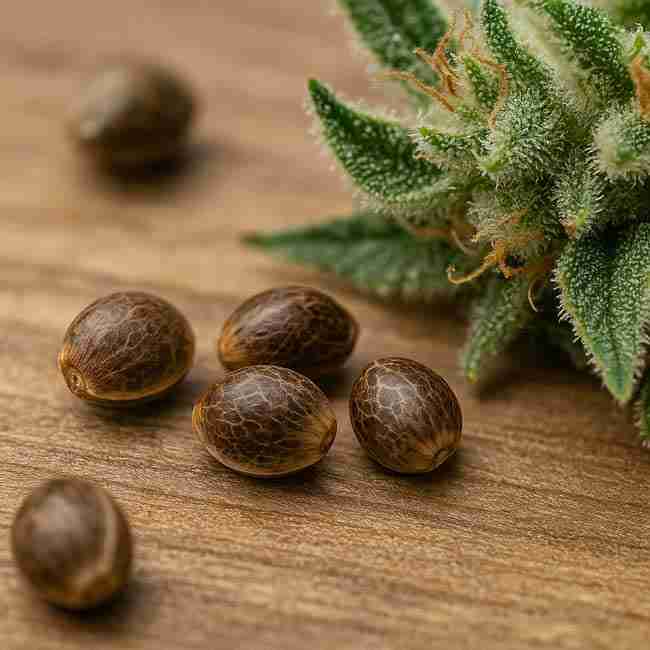
You crack open a fresh pack: ten seeds, but shades all over the place. Some are dark chocolate with “tiger stripes.” Others are tan and smooth. Your brain screams, “Dark equals premium!” However, color is mostly epidermis pigmentation plus handling and curing. A seed’s shell thickness, embryo health, internal moisture, and age drive germination—not just color.
What color can hint at:
- Very pale/greenish: likely immature (low viability).
- Tan to brown with some mottling: often mature and fine.
- Dark brown/near black with mottling: often fully mature—but not always.
- Uniform gray/dusty: sometimes aged/oxidized or just the line’s pigment.
What color cannot tell you:
- THC%, CBD%, terpene profile, plant sex, stability, yield potential, disease resistance.
Dark Marijuana Seeds vs. Light Seeds: A Practical Table

| Seed Color (visual) | Likely Status | Viability Expectation | What You Should Do | Reality Check |
|---|---|---|---|---|
| Very pale or green | Immature | Low | Don’t plant; let future batches mature fully | Color does help here: immature seeds are risky |
| Light tan, smooth | Mature or close | Moderate–High (if dense) | Do squeeze + soak tests; germinate 2–3 testers | Light ≠ weak if fully formed |
| Brown with mottling (“tiger stripes”) | Mature | High (if properly stored) | Proceed as normal | Stripes are nice, not required |
| Very dark/near black | Mature or overcured | Moderate–High | Check for brittleness & storage history | Dark ≠ “elite genetics” |
| Dull gray, chalky | Aged or desiccated | Variable | Hydrate carefully; consider scarification | Could be age/storage, not genetics |
Takeaway: Dark Marijuana Seeds can be great, but so can light ones. Your best move is to test density, age, and storage—not rely on color.
A 90-Second “No-BS” Seed Check You’ll Actually Use
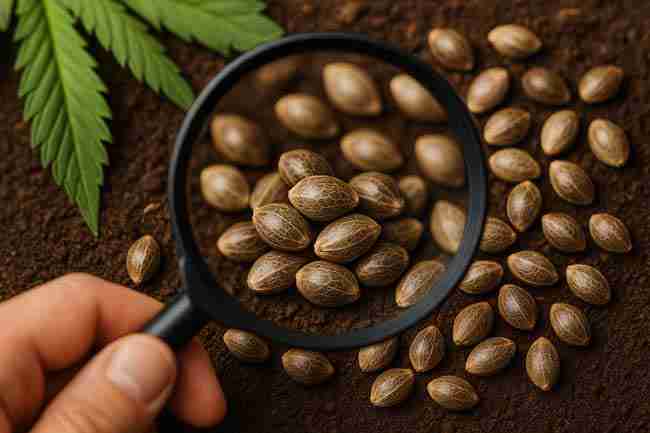
- Look: Skip green, badly cracked, or dented seeds.
- Pinch: A gentle squeeze between fingers—shouldn’t crush.
- Listen/Feel: Dense seeds feel like tiny stones; hollow duds feel papery.
- Soak Test (optional): Place in room-temp water for 12–18 hours. Sinking can indicate density, but don’t rely on this alone; some viable seeds float early.
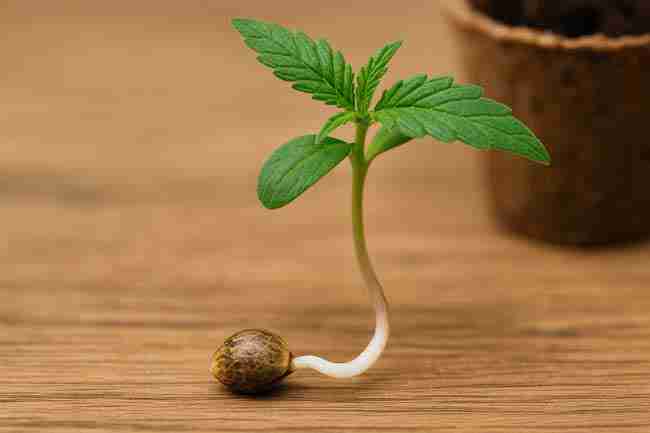
- Germinate a Sample: 2–3 seeds in a clean paper towel, 22–25°C, lightly moist, dark. Look for tail within 24–72 hours.
Pro tip: The germ test trumps every “visual” myth—including seed color.
The Real Specs That Matter (Not Color)
- Age of seed: Fresher (0–18 months) generally = higher vigor if stored right.
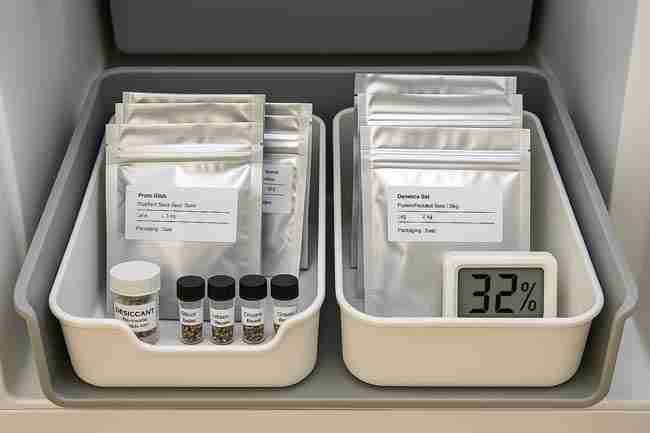
- Storage: Cool, dry, dark; airtight container with desiccant.
- Moisture exposure: The seed’s worst enemy; avoid repeated temp/humidity swings.
- Shell integrity: No crush, splits, or deep cracks.
- Line stability: Comes from breeder selection, not shell color.
- Breeder transparency: Germ rates, parent info, and clear production notes.
Are Dark Marijuana Seeds Better Than Light Seeds? (Nuanced Answer You Can Trust)
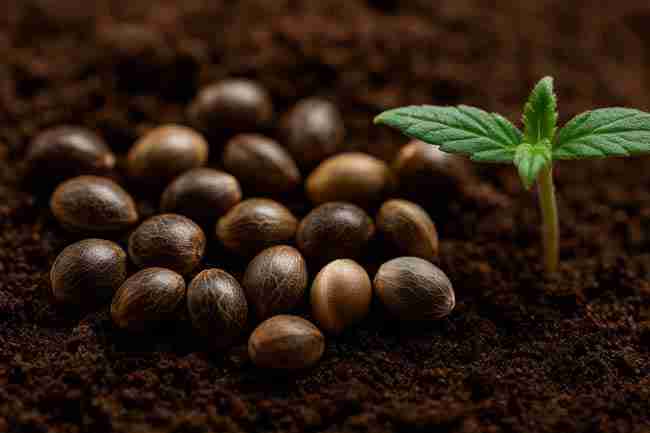
If you’ve got two equally mature seeds from the same batch—one darker, one lighter—their germination odds are comparable. Darker pigment suggests fully cured epidermis, but the embryo’s health and storage determine vigor. When you pick seeds, prioritize density, size, and breeder reputation over shade.
When color helps:
- Bright green = immature; skip.
- Consistently dark & brittle = possible over-drying/aging; hydrate gently.
- Mixed tans/browns = normal variation; not a problem.
“Dark Marijuana Seeds” — Pros & Cons (of trusting color)
Pros
- Quick maturity cue: very pale seeds are often immature.
- Easy heuristic for brand-new growers when combined with density tests.
- Correlates sometimes with proper curing.
Cons
- Not predictive of genetics, potency, terpenes, or herm risk.
- Can mask age damage (very dark + brittle).
- Leads to bias—you might toss perfectly viable light seeds.
- Encourages “tiger stripe worship”—unnecessary and misleading.
Spec Sheet: What to Track When You Buy or Store Seeds
- Target storage temp: 4–10°C (refrigerator range), stable.
- Humidity strategy: Airtight container + silica desiccant; keep dry.
- Light exposure: None. Dark drawer/fridge.
- Handling: Minimal opening/closing; avoid condensation cycles.
- Intended use window: 0–36 months ideal with proper storage; longer possible but expect reduced vigor.
- Record-keeping: Purchase date, breeder, batch/lot, line name, and any notes on parentage.
How to Stabilize a Phenotype? (Practical, step-by-step)
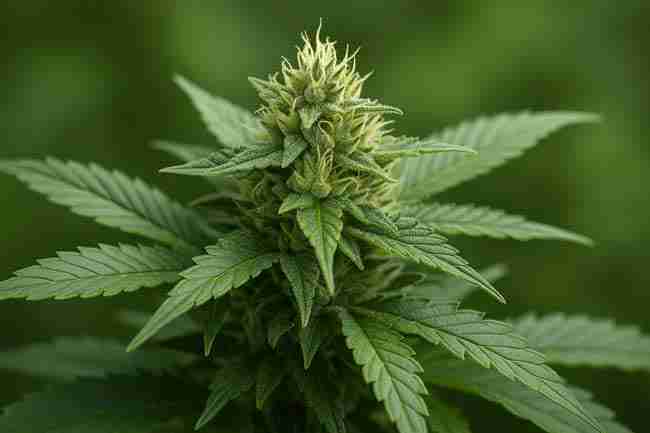
You loved a plant’s effect and structure—now you want it reliable every run. Color won’t stabilize anything; selection will.
Your stabilization roadmap
- Define the target phenotype
Write the must-have traits: height, flower time, terpene profile, disease resistance, bud density, branching. Be specific. - Start with numbers
Pop a real population (e.g., 40–100+ seeds, budget-dependent). More plants = better selection. - Select under pressure
Grow in realistic or even slightly stressful conditions (heat swings, lower EC, light cycle tests). Keep only plants that perform anyway. - Clone your keepers
Take cuts of every promising plant before flowering. This lets you re-run winners and run test crosses. - Make controlled crosses
- Linebreeding: Cross the best keepers together, then select again (F2, F3…).
- Backcrossing (BX): Cross offspring back to your star parent to reinforce key traits.
- Culling ruthlessly
Any herm, weak structure, poor resin, or off-terp goes to the compost. Don’t compromise. - Multi-cycle validation
Run top selections across seasons and rooms. Consistency is the whole point. - Document everything
Photos, dates, EC/PPM, VPD, yields, subjective effect notes. Stabilization is science and craft.
Goal: By F4–F6 (or an IBL), you should see high uniformity. That’s phenotypic stability—not “dark shells.”
Which Process Preserves Seed Genetics in Cannabis?

Think preservation, not “color conservation.” You’re protecting genetic diversity and fidelity.
Your preservation toolkit
- Open-pollination for diversity: Keep many unrelated males/females from the same line. Maintains the line’s variation.
- Inbreeding for uniformity (IBL path): Repeated sibling/self selections over generations to fix traits.
- Clonal preservation: Keep elite moms (and dads as reversed moms) in clean, separate veg spaces.
- Cold, dry, dark seed storage: Long-term seed banks rely on low moisture + low temp.
- Periodic maintenance increases: Every 3–5 years, regenerate seed stock under isolated conditions to avoid drift and contamination.
Are Feminized Seeds More Likely to Herm?
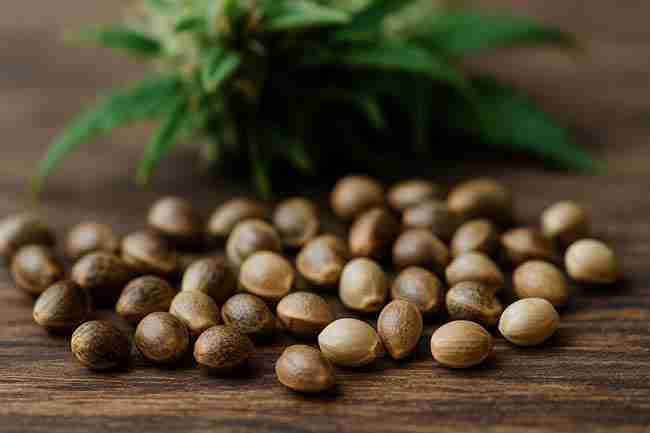
Short answer: Not if they’re bred correctly. Feminized seeds are made by inducing a female to produce viable pollen (commonly with STS or silver thiosulfate). If the parent females are stress-tested and herm-prone plants are culled, feminized lines can be just as stable as regular lines.
What really drives herms?
- Genetic predisposition (poor selection).
- Stress: light leaks, heat spikes, drought, nutrient extremes.
- Late flower stress: heavy pruning, broken branches, inconsistent photoperiod.
Your anti-herm checklist
- Buy from breeders who stress test.
- Keep your light cycle airtight.
- Avoid extreme environmental swings.
- Cull any plant that throws nanners early.
Color myth alert: Dark Marijuana Seeds don’t herm less (or more) than light ones. Herm tendency is about genetics + environment, not shell shade.
What Are F1 and F2 Seeds?
F1 (first filial generation)
- What it is: Cross of two distinct, preferably inbred or at least true-breeding parents.
- Why you care: Hybrid vigor—strong growth, good yield potential, often uniform phenos.
- Use case: Commercial runs and consistent home grows.
F2 (second filial generation)
- What it is: Offspring from F1 x F1 (sibling cross or selfed F1).
- What happens: Segregation—traits split wide; you’ll hunt phenos.
- Use case: Breeding projects and phenotype treasure hunts.
Snapshot Table: F1 vs F2 vs S1 vs IBL
| Type | How It’s Made | Uniformity | Vigor | For Whom |
|---|---|---|---|---|
| F1 | Parent A × Parent B (stabilized lines) | High | High | Growers who want consistency |
| F2 | F1 × F1 | Medium–Low | Medium–High | Breeders & pheno-hunters |
| S1 | Selfed female (reversed pollen) | Medium–High | Medium | Clone-only preservation, trait fixing |
| IBL | Many generations of selection/inbreeding | Very High | Medium | Reliability over surprise |
None of these categories depend on Dark Marijuana Seeds coloration. They’re genetic and breeding-method choices.
How to Maintain Genetic Purity During Seed Production
If you’re making seeds (even on a micro scale), your pollen control and record-keeping matter more than seed color.
Your purity protocol
- Isolation: Separate rooms or tents for different projects; intake filters; negative pressure if possible.
- Timing: Stagger projects so only one pollen source is active at a time.
- Bagging/Tagging: Use breathable pollen bags, label every branch/plant with parent IDs and dates.
- Sanitation: Clean fans, ducting, and surfaces; disposable suits if you’re serious.
- Dedicated tools: Scissors, brushes, and trays per project.
- “Shower & change” rule: After pollen handling, shower and change clothes before entering any other grow.
- Logs: Every pollination event recorded—who, when, where, how.
“Dark Marijuana Seeds” Myths—Busted One by One
- Dark = stronger weed → False. Potency is genetics + environment, not shell tint.
- Light = won’t germinate → False. Light but mature seeds can pop beautifully.
- Stripes mean elite → False. Stripes are pigment patterns, not pedigree certificates.
- Black shells are always old → Partly false. Some lines are naturally dark; test density and brittleness.
- Color shows sex → False. Sex is genetic; shell color is irrelevant.
- Color shows strain → False. You can’t ID a strain by shell tone.
- Color predicts herm risk → False. Selection and environment do that.
Action Plan: Buying, Storing, and Popping Seeds (Color-Agnostic)
- Buying: Choose transparent breeders who publish germ rates and parent info.
- Storing: Jar + desiccant + fridge; avoid freezer unless perfectly sealed and dried.
- Popping: Start 2–3 testers; don’t judge a pack by one stubborn seed.
- Tracking: Label cups, log dates, note phenos, take pics.
- Culling: Be brave—weak or hermy plants go. You’ll thank yourself later.
FAQs About Dark Marijuana Seeds
Do Dark Marijuana Seeds germinate better than light seeds?
No. Germination depends on maturity, age, storage, and density—not shade.
Are pale seeds always bad?
Bright green usually means immature—skip. Light tan but dense can be perfectly fine.
Do “tiger stripes” prove quality?
No. Stripes are a pigment pattern. Useful as a maturity hint, not a quality guarantee.
Can I revive old, very dark seeds?
Sometimes. Try a 12–18 hour soak with a drop of mild humic/fulvic solution, then warm, clean germ conditions. Expect lower germ rates.
Will feminized “dark” seeds herm less?
Color is unrelated. Feminized seeds from stress-tested parents and grown without stress can be very stable.
How do I quickly spot a dud?
If it crushes with mild pressure, feels hollow, or is visibly cracked open—don’t waste time.
Is there any benefit to choosing only Dark Marijuana Seeds?
Not inherently. You risk selection bias. Use objective tests instead: density, age, storage, breeder data.
Table: Seed Viability “Specs” You Can Actually Control
| Spec | Good Range/Practice | Simple Check |
|---|---|---|
| Storage temp | 4–10°C, stable | Fridge in airtight jar |
| Humidity control | Desiccant in container | Silica packet present |
| Handling | Minimal temp swings | Keep sealed; avoid repeated openings |
| Age window | 0–36 months ideal | Note purchase date |
| Density | Firm, not crushable | Gentle pinch test |
| Pre-germ hydration | 12–18 hours max | Seed sinks eventually; don’t over-soak |
Bottom Line You Can Act On Today
Stop letting Dark Marijuana Seeds color your judgment. Mature, dense, well-stored seeds—whatever their shade—are your best bet. Buy from transparent breeders, store seeds cold and dry, and germ-test a couple before committing. That’s how you win more harvests, fewer headaches.
Pros & Cons Recap (Color as a Buying Signal)
Pros
- Quick filter for obvious immaturity (green = no).
- Easy first glance heuristic.
Cons
- Not predictive of genetic quality or plant performance.
- Can hide age/brittleness issues.
- Encourages bias that wastes viable lighter seeds.