Ant Colonies in Outdoor Cannabis Grows: Friend, Foe, or Both?


Ants in outdoor cannabis beds can boost soil aeration and chase away caterpillars, but they also “farm” sap‑sucking pests like aphids. Keep colonies small by mulching, blocking honeydew, and using food‑grade diatomaceous earth.
Ant Colonies in Outdoor Cannabis: Why You Keep Bumping Into Tiny Six‑Legged Neighbors

Picture this: you stroll past your flowering ladies at sunrise, coffee in hand, and—whoa!—a bustling ant highway zigzags up every stalk. You wonder, “Should I freak out?” Hold your horses. Ants pop up in almost every healthy outdoor plot because the same cozy soil that cradles your roots also feels like a five‑star resort to an ant. However, whether they act like helpful housekeepers or rowdy party‑crashers depends on what else is living in your grow.
Ant Biology in Plain Talk
Ants are social insects, sort of like little construction crews. A queen lays eggs, workers haul food, soldiers protect the nest. They build tunnels that let air and water slip deeper, and that’s gold for cannabis roots. Yet, ants love sweet snacks—especially honeydew, the sticky poop left by aphids and whiteflies. If honeydew flows, ants turn into tiny ranchers, guarding those sap‑suckers the way you guard your best mother plant.
Common Ant Species in Cannabis Gardens

| Species | What It Looks Like | Friend or Foe? | Odd Quirk |
|---|---|---|---|
| Pavement ant | Brown, 3 mm, slow walker | Mostly neutral | Sets up shop under stones |
| Carpenter ant | Big, black, 10 mm | Can be foe | Chews damp wood—not roots |
| Fire ant | Red, 5 mm, aggressive | Often foe | Painful sting, loves seeds |
| Argentine ant | Tiny, gray brown, 2 mm | Mixed bag | Forms super colonies |
The Good Side: How Ants Help Your Cannabis Grow
You might say, “Breeder Brent, why keep any ants at all?” Because, partner, some colonies pull their weight.
Soil Tunneling = Free Aeration
Those winding galleries fluff up compact clay like a hand‑tiller. Roots scoot through the loosened soil, oxygen reaches the rhizosphere, and microbes throw a dance party. Think of ants as living drill bits—no batteries required.
Pest‑Control Partners
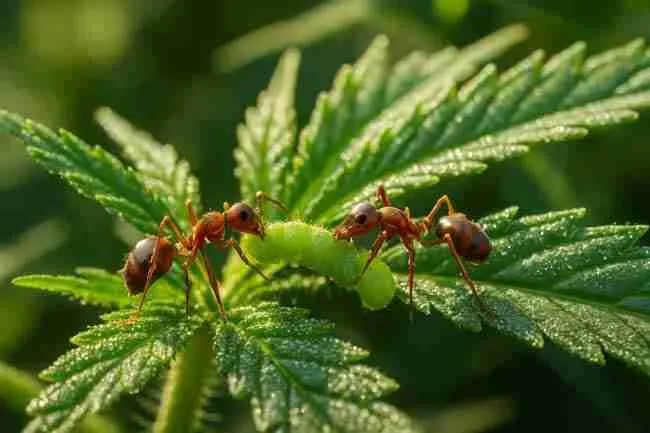
When caterpillars, moth eggs, or dead gnats show up, worker ants haul the buffet home. Fewer pests chewing leaves means more energy flows to buds.
Ants vs. Fungus Gnats
Ever fought clouds of gnats in damp pots? Ants chase gnat larvae like kids chase ice‑cream trucks. They drag them out, bite them, and—bam—your damping‑off nightmare eases.
Indicators of Soil Health
A moderate colony hints at balanced moisture, decaying organic matter, and mild temps. In other words, ants can be a canary in your grow tunnel: if they vanish, something’s off.
The Bad Side: When Ants Turn Into Tiny Outlaws

Flip the coin, though, and ants become the Bonnie and Clyde of your cannabis patch.
Aphid Farming and Honeydew Havoc
Workers stroke aphids with their antennae like dairy cows, milking sugary drops, then protect the herd. Aphids pierce leaves and suck phloem, draining vigor and vectoring viruses. Your cola density plummets.
Root Disturbance and Seedling Stress
Fire ants fancy building mounds around young stems. Mound heat plus root nibbling equals wilted babies right when you need booming growth.
Biting, Stinging, and Harvest Troubles
Carpenter ants rarely bite, yet they do burrow into drip‑line wood. Fire ants sting your ankles during harvest. Argentine ants crawl into drying rooms, marching across sticky buds and leaving—ick—ant bits in trichomes.
Friend, Foe, or Both? A Balanced Look

Below’s a snapshot that stops the back‑and‑forth guessing game.
| Pros | Cons |
|---|---|
| Free soil aeration | Protect sap‑sucking pests |
| Predator removal (caterpillars, gnat larvae) | Build mounds that smother seedlings |
| Speed up compost breakdown | Can sting workers during harvest |
| Recycle dead plant matter | May invite mold via honeydew |
Factors That Tip the Scale
- Presence of Honeydew‑Makers: More aphids → ants act like bodyguards.
- Soil Texture: Heavy clay → ants help. Sandy soil → their tunnels dry roots.
- Species Mix: Pavement ants = mostly chill. Fire ants = call the hazmat team.
Practical Strategies: Working With Ants, Not Against Them

Remember, you’re playing chess, not whack‑a‑mole. React smart.
Observation First, Action Second
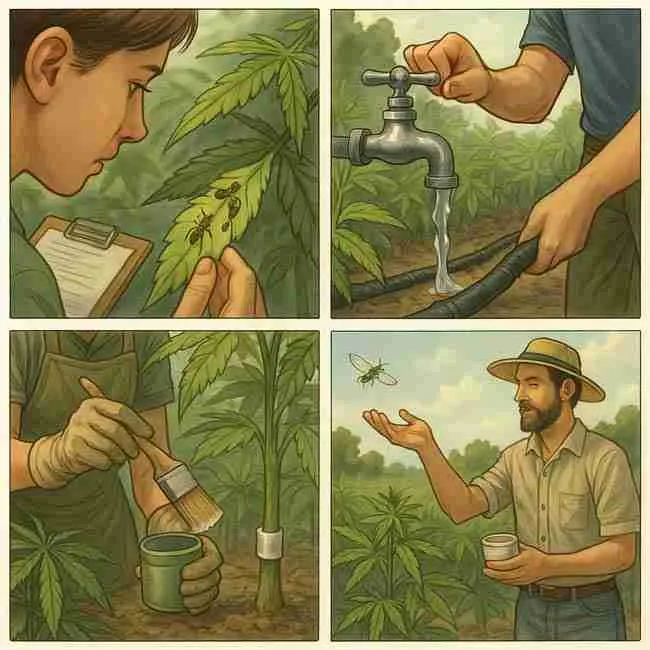
Walk the rows. Look under leaves for aphids. If none, pause. Ants might be harmless visitors.
Organic Ant Management Tools
- Food‑grade diatomaceous earth (DE): Dust stems. DE scratches ant exoskeletons, causing dehydration. Safe for buds.
- Sticky barriers: Slather Tanglefoot around grow bag rims. Ants can’t cross the goo.
- Beneficial nematodes: Water them into soil. They target ant larval stages.
Natural Ant Deterrents
Here’s a quick‑hit list you can copy to a sticky note:
- Cinnamon powder lines
- Coffee grounds mulch
- Citrus oil spray on mound tops
- Companion plants like pennyroyal and mint
- Flooding nests with soapy water at dawn
Living Mulch, Barriers, and Companion Plants
A thick clover living mulch blocks sunlight from ant holes. Dual win: nitrogen boost. Edge beds with marigolds; their roots exude limonene, shooing many ant species.
OSO Snippet: 60‑Second Fixes
Need a right‑now remedy for scouts on stems? Wipe the trail with 1 part vinegar + 3 parts water. It erases pheromone GPS lines in under a minute.
Step‑by‑Step Rescue Plan if Ants Take Over
Day 1–2: Identify Allies and Villains
- Shake branches over white paper. Count aphids.
- Snap phone pics and enlarge. ID species using free online keys.
Day 3–4: Soil Adjustments
- Reduce surface moisture by upping airflow or lengthening irrigation intervals.
- Top‑dress with vermicompost; the chitinase enzymes deter ant larvae.
Day 5 +: Long‑Term Prevention
- Apply 2 cm of fine basalt rock dust. The grit wrecks tunnels.
- Rotate beds next season; ants hate disturbance.
- Release lacewings twice per month—aphids gone, ants migrate.
Specifications for Safe Ant‑Control Inputs

| Product | Active Material | Application Rate | Re‑entry Interval | Bud Safety |
|---|---|---|---|---|
| Food‑grade DE | Amorphous silica | Light dusting every 7 days | 0 hours | Excellent |
| Citrus oil concentrate | d‑Limonene 5% | 30 ml / L spray on mounds | 24 hours | Good if rinsed |
| Nematodes (Steinernema feltiae) | Live organisms | 5 million / 10 m² soil drench | 0 hours | Excellent |
| Boric‑sugar bait in stations | Boric acid 1% | Refresh weekly | 48 hours | Keep away from roots |
(Always test a small area first. Your climate, soil pH, and cultivar sensitivity may vary.)
Frequently Asked Questions

Do ants eat cannabis roots?
Not usually. Most species chew soil, not roots, but fire ants can nibble tender seedlings.
Will ants ruin THC potency?
Nope. They don’t touch cannabinoids. Stress from sap‑suckers they protect, however, can drop yields.
Can I just pour boiling water on the nest?
You can, but boiling water might cook nearby feeder roots too. Safer to use warm soapy water or a bait station.
Is diatomaceous earth safe during flowering?
Yes—just avoid direct contact with sticky trichomes. Dust lower stems, not buds.
Why do ants disappear after a heavy rain?
Flooded tunnels force colonies to higher ground. If rain hits while aphids die from wash‑off, ants often relocate permanently.
Final Thoughts

Here’s the blunt truth: ants in outdoor cannabis grows aren’t all saints or sinners—they’re more like rowdy cousins who help fix the roof yet raid your fridge. You’ll thrive when you read the signs, curb the sugar flow from aphids, and steer the colony’s energy into tasks that suit your goals—fatter buds, cleaner roots, smoother harvest days. Use the tools above, stay curious, and you’ll keep those six‑legged contractors on payroll without letting them run the show. Happy growing!