10 Reasons Why Cannabis Plants Grow Slow

Cannabis plants grow slow when something in the tent is off. Not because the plant is “lazy.” Light, water, cold roots, pH, food, pot size, genetics, humidity, pests, and stress. That’s the list. You fix the one that’s actually broken, not all ten at once.
Look, marijuana plants grow slow for beginners more than anyone because the first instinct is to add more nutes. However, most stalled plants are drowning, cold, or sitting in the dark. Walking into a 2×2 at week three, you want internodes stacking. If you’re still staring at the same two leaves, this page is your checklist. Start with fresh cannabis seeds and a plant count you can finish: how many cannabis seeds.
How to Tell If Growth Is Actually Slow
A seedling is not a tree in ten days. Cotyledons, then first serrated leaves, then a new set every few days in decent veg. Autos can look pokey early, then take off. Photoperiods veg until you flip them. If nothing new has shown in a week, that’s slow. If the plant is stretching like a wet noodle, that’s not slow. That’s a light problem wearing a height costume.
Healthy veg under 18/6 with real PPFD often puts on a noticeable node every 3–5 days once it’s past week two. Flower stretch in weeks 1–3 of 12/12 is normal. After that, height slows and buds should fatten. If veg is frozen and the leaves look “fine,” you still have a problem. Fine leaves plus no new growth is the classic stall.
A 10-Minute Walkthrough Before You Buy More Bottles
Do this before you open Amazon. Lift every pot. Heavy and cold means wet. Light and crispy means thirsty. Stick a finger in. Check the thermometer at the leaves, not on the floor. Look at internodes: long and pale is light. Tight, dark, and stuck is often pH, cold, or salt. Flip a yellow sticky card near the soil. Gnats mean you’ve been kind with the watering can.
Worked example. You have three feminized plants in a 3×3. Two are stacking. One looks like week one forever. Same light. Same bottle. That one pot is still heavy two days after you watered the others. Don’t feed it. Don’t move the whole light. Let that pot dry, maybe slip it into a smaller circle of water next time. If all three are stalled, it’s the room: PPFD, temp, or everyone is sitting in mud.
Change one thing. Write it down. Wait 48–72 hours. New growth tells the truth. Old leaves stay ugly. That’s normal. You’re not growing a museum of pretty cotyledons. You’re growing the next set.
1. Weak Light, Wrong Distance, or a Fake Watt Label
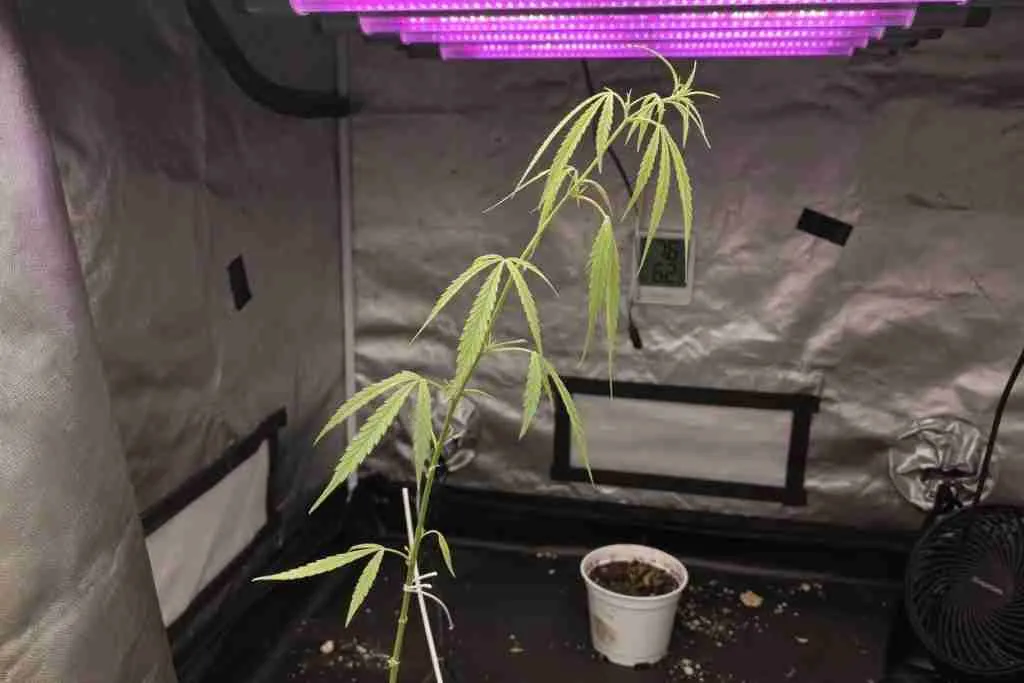
Light is food. If cannabis plants grow slow and they’re skinny, pale, or leaning, the canopy is starving. A blurple “1000 W” brick that draws 80 W is a night-light. Phone lux apps lie. You want PPFD, the photon count the plant actually uses.
PPFD targets that keep veg moving
| Stage | PPFD (µmol/m²/s) | Hours | What slow looks like |
|---|---|---|---|
| Seedling | 150–300 | 18/6 | stretch, pale stem |
| Early veg | 300–500 | 18/6 | tiny nodes, no drink |
| Late veg | 400–600 | 18/6 | flat growth, dark but stuck |
| Flower (no extra CO2) | 700–1,000 | 12/12 | airy buds later, not height |
Hung too high, even a good bar acts weak. Hung too close, leaves taco and growth stalls from stress. Dim first, then raise. Map a 9-point grid if you can. Corners more than 20% dimmer than the center grow slow on purpose. Fluffy later is often this same problem: cannabis buds light and fluffy. Gear that actually hits those numbers: best tech for cannabis growers in 2026.
Specs: 18/6 veg, 12/12 flower for photoperiods, 18/6 or 20/4 for autos. True LED draw about 30–40 W per sq ft in flower. Pros of more even light: tighter internodes, faster veg. Cons of slamming PPFD too soon: taco leaves, bleach, stalled seedlings. Indoor basics: indoor cannabis growers guide.
2. Overwatering: Roots Need Air, Not a Swamp
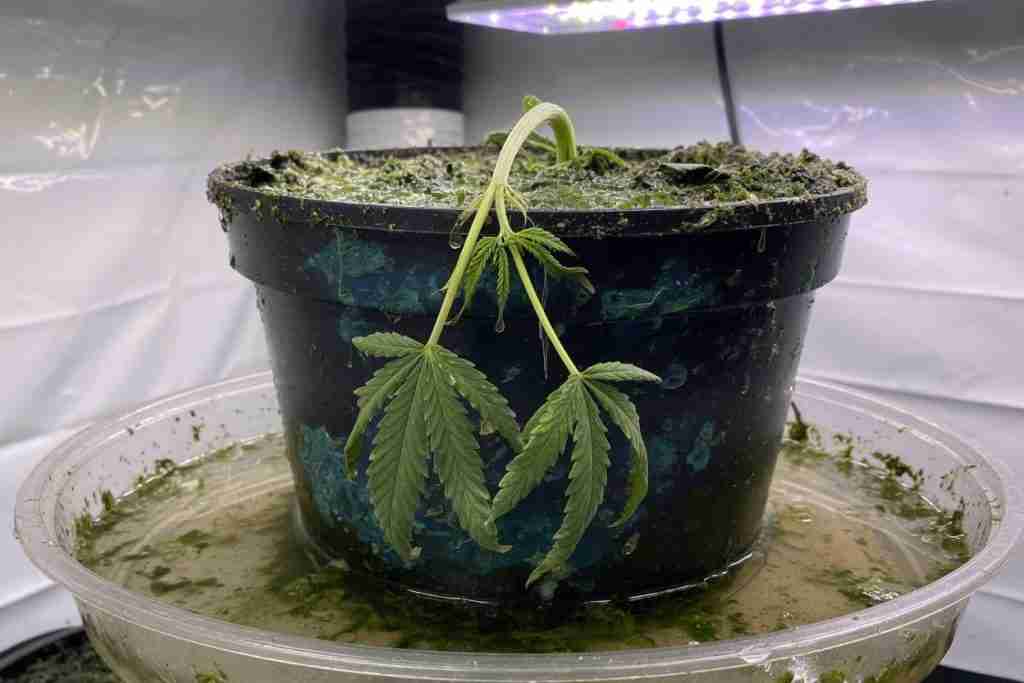
This is the number-one beginner stall. You water “just in case.” The pot stays heavy. Roots sit in mud. Oxygen drops. Growth crawls. Leaves droop like they need a drink, so you water again. That’s the trap.
Lift the pot, don’t watch the calendar
A wet 5-gallon fabric pot feels like a bowling ball. A ready pot feels light. Seedlings in a 5-gallon ocean take forever to dry, so they stall. Start small: a cup or 0.5–1 gal, then step up. Water in a ring around the stem, not a flood. Let the top inch dry in soil. In coco you water more often but still want air. Hydro needs dissolved oxygen, not still soup.
Algae on the soil, fungus gnats, puffy leaves, yellow bottoms, and a pot that never lightens: that’s overwatering wearing a nutrient costume. Fix: stop. Add airflow. Maybe a chopstick air hole. Don’t “feed” a drowning plant. Watering walkthrough: how to water cannabis plants. Yellow babies: cannabis seedling yellowing. Roots and oxygen: cannabis root oxygenation.
Specs: fabric or air pots, 20–30% perlite in soil, runoff 10–20% in coco, root zone 68–72°F (20–22°C). Pros of drybacks: faster roots, fewer gnats. Cons of going bone-dry: wilt, calcium issues, crispy edges. Underwatering recovers in hours. Overwatering takes days.
3. Cold Air and Cold Roots Slow Metabolism

Cannabis is not a snow pea. Below about 65°F (18°C) at the leaf, chemistry slows. Below 60°F (15°C) veg can crawl. Roots hate it even more. A 50°F concrete floor under a fabric pot is a fridge. The room can read 72°F while the root ball sits at 58°F. Then you wonder why marijuana plants grow slow in a “warm” basement.
Target lights-on 75–80°F (24–27°C) in veg, a few degrees cooler at night, not a 20°F crash. Root zone 68–72°F. Heat mats under seedling trays help. Oil radiators in the room beat space heaters inside the tent. Too hot (over ~85°F / 29°C without extra CO2) also stalls because stomata slam shut. Cold climate notes: growing cannabis in colder climates.
Specs: veg 75–82°F, flower 72–78°F without extra CO2, night drop 5–8°F max. Pros of stable warmth: faster nodes, better drink. Cons of blasting heat: dry VPD, stretch, crispy tips. Put the thermometer at canopy height, not on the tent pole by the exhaust.
4. pH Lockout: The Food Is There, Roots Can’t Grab It
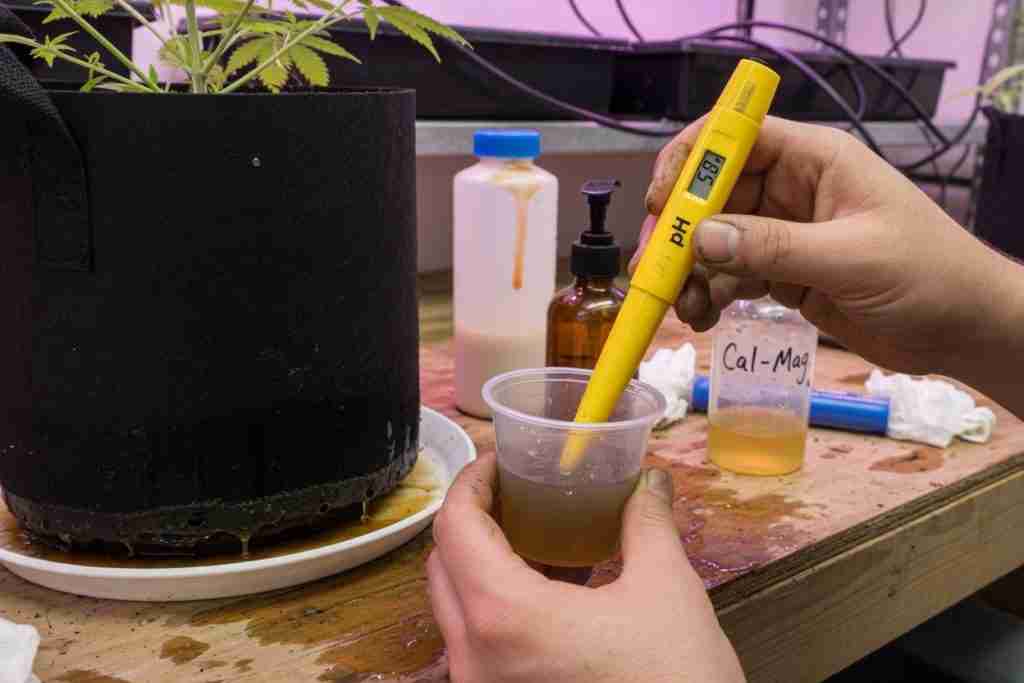
Wrong pH makes cannabis plants grow slow even with a full bottle of nutes. The minerals sit in the water like food behind a locked door. You see random yellowing, spots, purple stems, or “deficiency” charts that don’t match. A $12 pen that never gets calibrated is how you get that movie.
pH windows that actually work
- Soil: 6.2–6.8
- Coco: 5.7–6.2
- Hydro: 5.6–6.1
- Calibrate with 4.01 and 7.00. Store the probe wet.
Check runoff, not just the jug. If input is 6.0 and runoff is 7.4, the pot is salty or the medium drifted. Flush with pH’d water, then feed milder. Lockout guide: cannabis nutrient lockout and pH for growing cannabis. City water with high bicarbonates pushes pH up every day: water hardness and bicarbonates.
Pros of a real pH pen: deficiencies vanish without new bottles. Cons: probes die if you store them dry. Don’t chase 5.8 every hour in soil. Drift a little. Hydro needs tighter control.
5. Feeding Too Little, Too Much, or the Wrong EC
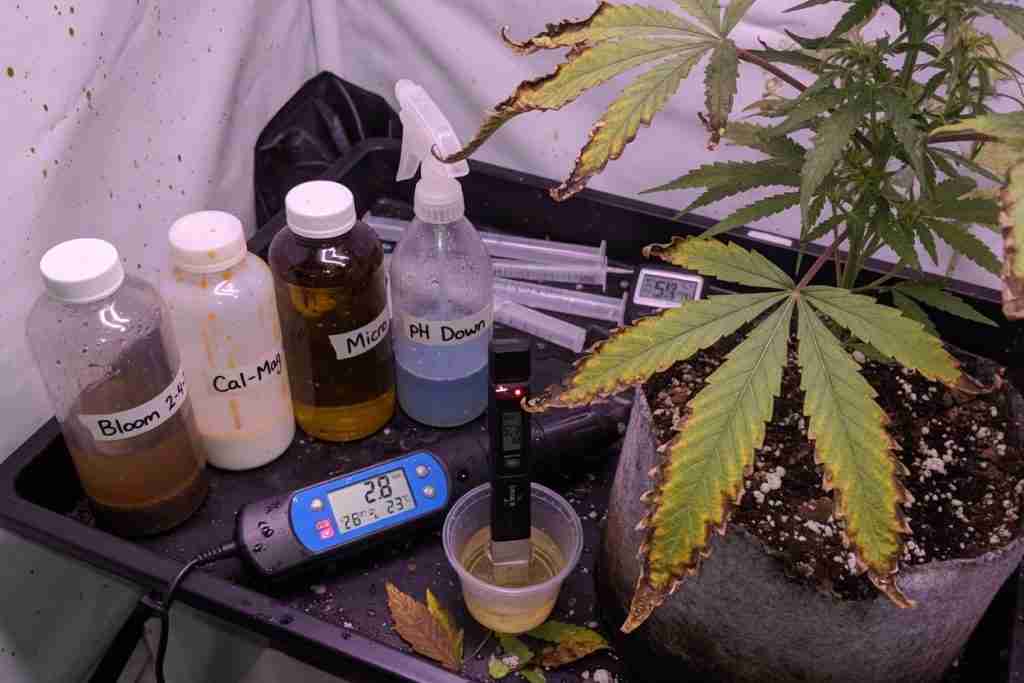
Seedlings live on the seed for a bit. Hot soil plus bottled nutes on day three burns tips and stalls. On the flip side, coco with plain water starves fast. Nitrogen shortage makes pale, slow veg. Too much nitrogen makes dark clawed leaves that also grow slow. Both look like “I should add more.” Don’t.
EC is feed strength. Seedlings 0.2–0.6. Veg often 1.0–1.6 in coco. Flower often 1.4–2.0 depending on the cultivar. If runoff EC climbs 0.4+ above input, you’re salting the pot. If the plant is pale and runoff is lower than feed, it ate. Bump 0.2, wait. Charts: dialing EC by phase. Nitrogen notes: nitrogen for cannabis. Deficiency overview: cannabis nutrient deficiency.
Know if your meter is 500 or 700 ppm scale. Mixing those numbers is how people torch a tent. Cal-mag in coco from the start if your water is soft. Don’t stack three bloom boosters in week two of veg. Pros of mild, steady EC: clean growth. Cons of chasing “more food”: lockout, gnats love wet salty soil, tips burn, then you flush and stall again.
6. Pot Size: A Thimble or a Swimming Pool
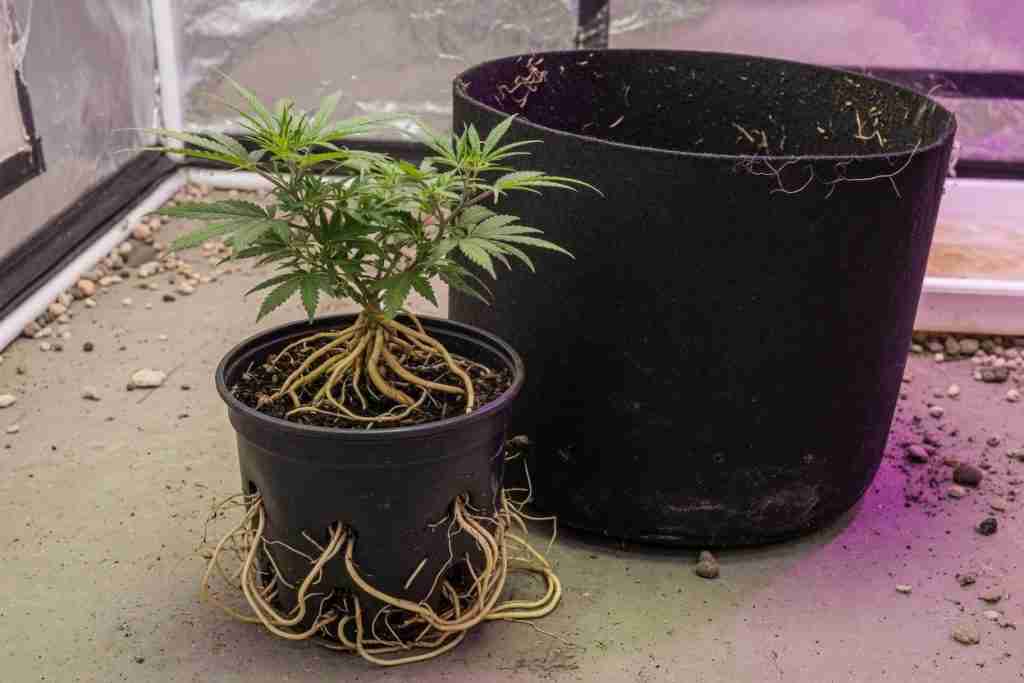
A seedling in a 7-gallon bag is a goldfish in a lake. The medium stays wet. Roots don’t chase. Growth stalls. A rootbound plant in a 1-gallon cup is the other movie: it drinks daily, then stops stacking because there’s nowhere to go. Sized for a closet, a 2×2 still wants one plant in 3–5 gal, not four trees in shot glasses.
Start in a cup. Move to 1–3 gal, then the final 3–7 gal depending on tent and veg time. Autos often finish in 3 gal. Photoperiods with a long veg like 5–7. Fabric air-prunes. Plastic circles. One seed, one final pot. Don’t drop two beans in one bag “to pick a winner.” That’s tangled roots and two slow plants. Containers and mixes: peat vs coco vs plugs.
Specs: 3 gal autos, 5 gal most photos, 7 gal long veg. Trays under fabric. Pros of stepping up: faster early growth. Cons of too many transplants: shock. If you hate transplanting, start in the final pot but water a small circle only.
7. Genetics, Old Seeds, Autos, and Runts
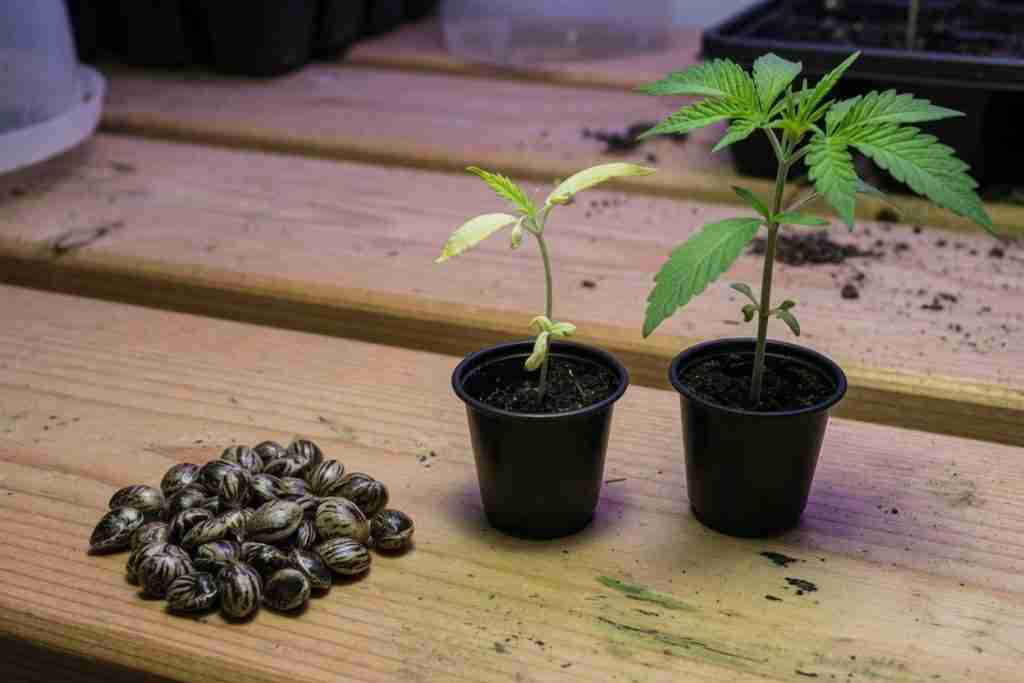
Some marijuana plants grow slow because that’s the recipe. Old seed can germ late and stay pokey. Tiny seeds often make tiny babies for a week, then catch up. A runt in a pack is real. That’s why you don’t plant your last bean as your only plant. Fresh feminized seed from a real bank usually pops hard. Garage seed from 2018 is a science project.
Autos have a clock. They will not “veg until they’re huge.” If you stall an auto in week two, you steal flower size. Photoperiods wait for 12/12. Indica-leaning plants stay short. Sativa-leaning plants stretch. Don’t compare a squat kush to a lanky haze and call one broken: cannabis indica vs cannabis sativa.
A normal pace, not a fantasy calendar
Days 1–3: taproot, hook, cotyledons. Days 4–10: first serrated pair, still small. Days 10–21: true veg starts if light and drybacks are honest. Autos often show pistils around day 21–30 even if they’re still short. That’s the clock, not a failure. Photoperiods can sit in veg 3–8 weeks on purpose. If an auto is still a sad two-inch stick on day 21 with wet soil, you already spent the stretch. Autos: grow autoflowering cannabis plants. Germ: cannabis seed germination. Stash: seed stash storage. Feminized vs regular if you’re hunting: feminized and regular cannabis seeds.
Clones from a tired mom can crawl. Seeds from a stressed plant can too. If every plant in the tent is slow, it’s the room. If one is slow and the rest are flying, it might be a runt. Cull if you have extras. Canada’s four-plant cap makes that choice real: buy cannabis seeds in Canada. U.S. plant counts: USA 2026 seed guide. Beginners: how to buy cannabis seeds for beginners.
8. VPD and Humidity: Stomata on Strike

VPD is how thirsty the air is. Too muggy, stomata get lazy, water doesn’t move, food doesn’t ride the stream, cannabis plants grow slow. Too desert-dry, stomata clamp, same stall, plus taco edges. You can have “perfect” °F and still be wrong if RH is 80% in veg or 30% in a seedling dome you forgot to crack.
Seedlings like 65–75% RH. Veg 55–70%. Early flower 45–55%. Late flower 40–50%. Pair with temp so VPD sits near 0.8–1.2 kPa in veg and 1.1–1.5 in flower. Plain English: cannabis VPD explained. Leaves canoe when the air is too greedy: when marijuana leaves canoe.
A clip fan that blasts one leaf is windburn, not VPD. Gentle flutter. Exhaust sized for the box. Dehumidifier in flower if the tent sweats. Pros of dialed VPD: plants drink on schedule, nodes stack. Cons of chasing a chart every ten minutes: you never let the room settle. Change one thing, wait a day.
9. Pests, Gnats, Root Rot, and Invisible Disease
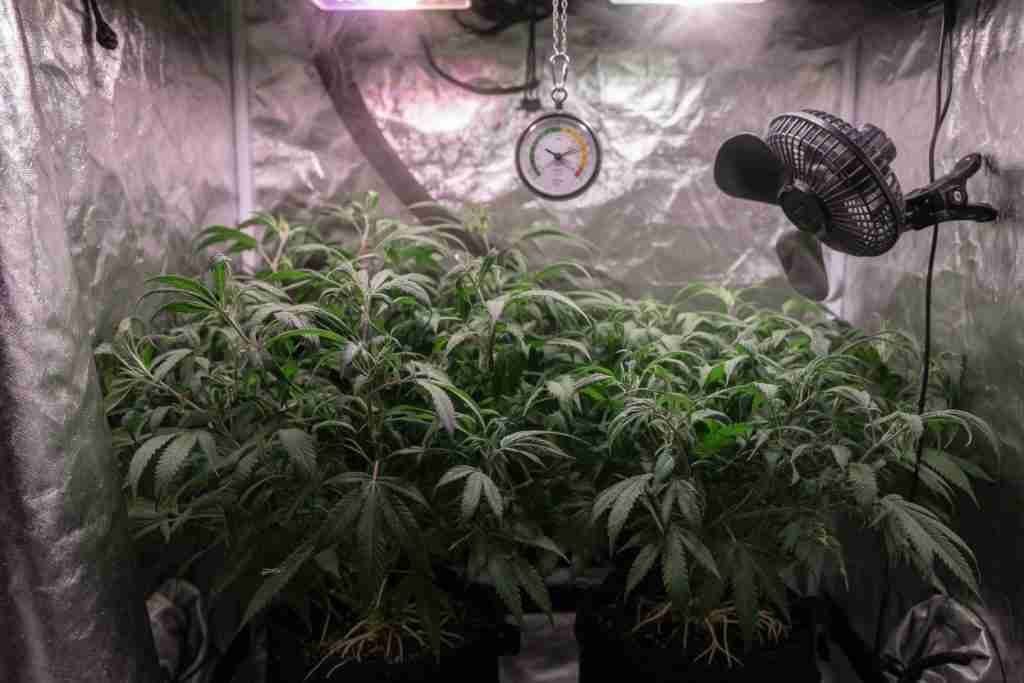
Fungus gnats love swamp pots. Larvae chew root hairs. Then cannabis plants grow slow and look hungry. Spider mites suck. Thrips stipple. Root rot smells like a swamp and turns roots brown and slimy. Above ground you get droop that doesn’t perk after lights-off. That’s not a nitrogen deficiency. That’s a funeral.
Let the medium dry. Yellow sticky cards. Beneficial nematodes or BTI dunks for gnats. Don’t bring unquarantined clones into a clean tent: cannabis seeds vs cannabis clones. Root rot playbook: treat root rot in cannabis. Bottom leaves dying: dying from the bottom up.
Hop latent viroid and tired clone stock can make a whole run look “just slow.” Seeds skip that baggage if you start clean. Keep tools clean. Don’t share clone water like it’s a punch bowl. Pros of dry, clean pots: gnats leave. Cons of ignoring a few flies: they become a cloud, then roots, then stall city.
10. Transplant Shock, Heavy Training, and Light Leaks
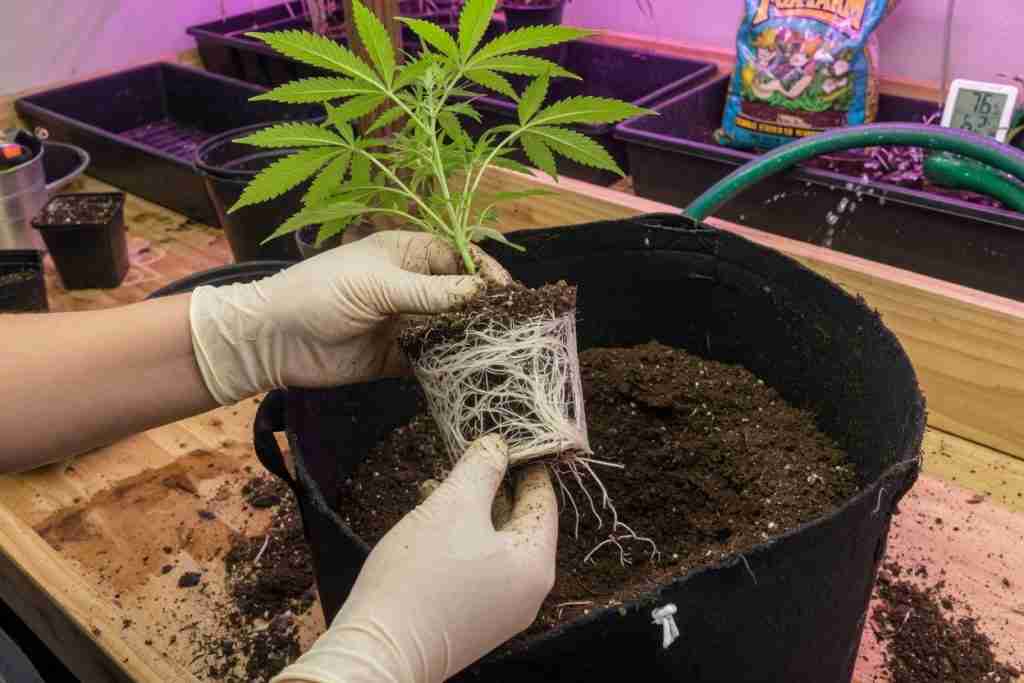
Ripping a root ball apart, topping three times in a week, and flipping to 12/12 on the same Tuesday is how you pause a plant. Transplant when roots show at the bottom, keep the ball intact, water in, dim the light a day. LST is gentler than topping on a stalling plant. Autos hate topping if they’re already behind.
Photoperiods need a real dark period to flower. A blinking charger in the tent can confuse hormones. Veg still wants 18/6, not random on/off. Light leaks in flower cause weird stretch or nanners, which wastes energy that should have been growth. First-run checklist: new cannabis growers checklist. Money mistakes: beginner mistakes that waste money.
Specs: one training event, then wait 3–5 days. Transplant into pre-moistened mix. 24–48 hours of slightly lower PPFD after a move. Pros of patience: the bounce-back is real. Cons of “fixing” five things overnight: you never know what worked.
Specs Cheat Sheet: Fast vs Slow
| Check | Fast-enough range | Slow-growth red flag |
|---|---|---|
| PPFD veg | 400–600 | under 250 with stretch |
| Pot feel | light before water | always heavy, algae, gnats |
| Air temp | 75–80°F veg | under 65°F or over 85°F |
| Root temp | 68–72°F | cold floor, icy water |
| pH soil / coco | 6.2–6.8 / 5.7–6.2 | random deficiencies |
| EC veg coco | 1.0–1.6 | 0.2 pale or 2.4 burnt |
| RH veg | 55–70% | 80% swamp or 30% desert |
| New nodes | every few days in veg | nothing new in 7+ days |
Pros and Cons of Pushing Speed
Pros of chasing faster veg: shorter total run, less power, less chance to mess up a long veg, autos finish on time. A 4×4 that actually hits 500 PPFD and dries between waters will outrun a “secret nutrient” tent every time.
Cons of forcing speed: slamming PPFD on babies, cranking EC, topping a stalling auto, heating the tent to 88°F. That’s stress, herm risk, and fox tails later. Fast enough is even internodes and a plant that drinks on schedule. Not a science-fiction tree by Friday.
FAQ: Cannabis Plants Grow Slow
Why is my seedling still tiny after two weeks?
Usually overwatering, a giant wet pot, weak light, or cold. Less often, old seed. Stop watering, warm the roots, bring gentle PPFD to 200–300, wait. Don’t feed yet.
Why is one plant slower than the others?
Different drinker, different pH in that pot, a weaker seed, or it sat wetter. Treat that pot as its own plant. Don’t drown the whole tray to save one.
Do autos grow slower than photoperiods?
They grow on a timer, not slower forever. Early auto veg can look small. If you stall an auto, you don’t get extra veg weeks back. Photoperiods can wait. Autos can’t.
Will more nutrients make marijuana plants grow faster?
Only if they were actually hungry and pH is in range. Most slow tents are wet, dark, or cold. Food is last, not first.
How long until I see a fix working?
Light and warmth can show in 2–4 days. Overwatering takes a dryback, often 3–7 days. pH lockout eases after a flush and a mild feed, then new growth looks clean. Old damaged leaves won’t turn pretty. Watch the newest set.
Outdoor plants stall for extra reasons: short spring days, cold nights, soggy beds, and shade from a fence. Same rules. Warm roots, don’t drown the hole, and pick a spot that actually sees sun. A patio pot against a north wall will make marijuana plants grow slow no matter how fancy the soil is.
Pick one cause. Change that. Wait. Cannabis plants grow slow when the room argues with the roots. Get light, air, and drybacks honest, and the plant usually remembers how to grow. Grab a pack that fits your tent, pop them clean, and don’t love them to death with the watering can. Store extras right and keep a spare bean: the cannabis seeds store.